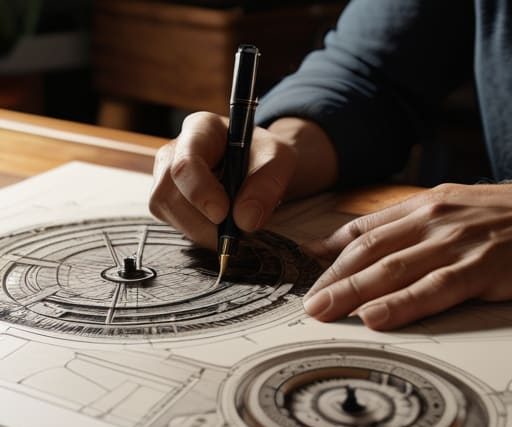
I was sitting in my favorite corner café this morning, the scent of roasted beans and damp pavement drifting through the window, when I realized my sketchbook was filled with the same three layout ideas I’ve been “perfecting” for months. I wasn’t actually designing; I was stuck in a loop of scrolling through design blogs and re-reading the same productivity hacks, hoping for a magical spark that never came. We’ve all been there, paralyzed by a digital hoarding of information, constantly searching for how to stop re-reading the same advice instead of actually picking up the pencil. It’s a subtle kind of stagnation that feels like staring at a beautiful, empty room and waiting for the furniture to arrange itself.
Sometimes, the best way to stop the mental clutter is to step away from the heavy theory and find a sense of grounded simplicity in your daily routine. I’ve found that when my own design process feels stuck in a loop of over-analysis, leaning into more relaxed, approachable lifestyle ideas helps clear the fog. If you’re looking for a bit of lighthearted inspiration to shift your focus from intense consumption to just living more intentionally, I’ve been spending a lot of time browsing https://casualmichigan.com/ to find those small, refreshing perspectives that make everyday life feel a little more curated and a lot less overwhelming.
I’m not here to give you another curated list of “life-changing” habits that require a complete lifestyle overhaul. Instead, I want to share how I transitioned from passive consumption to active creation by treating my knowledge like a well-designed floor plan—functional, intentional, and built to be lived in. I’m going to show you how to stop collecting insights and start applying them, moving past the theoretical clutter to find your own creative momentum.
Escaping the Action vs Consumption Loop

I’ve sat in more dimly lit corner cafés than I care to admit, staring at a stack of highlighted books while my sketchbook remains stubbornly blank. It’s a frustrating paradox: I feel like I’m working because I’m learning, but my actual environment—my real, tangible life—remains unchanged. This is the trap of the action vs consumption loop, where the dopamine hit of “knowing” something better masquerades as actual progress. We tell ourselves we need one more podcast or one more chapter before we’re “ready” to redesign our lives, but in reality, we are just decorating a mental room we never actually step foot in.
To move forward, we have to confront the uncomfortable truth of why I can’t implement advice despite having all the tools at my disposal. Often, it’s not a lack of information, but a fear of the messiness that comes with trial and error. We get stuck in overcoming analysis paralysis by treating every piece of wisdom like a sacred blueprint that must be followed perfectly. Instead, I’ve learned to treat advice like a rough sketch on a napkin—it’s just a starting point, meant to be refined, erased, and built upon through the actual act of doing.
Breaking the Cycle of Passive Learning
We’ve all been there: sitting in a sun-drenched corner of a café, a stack of design journals beside us, feeling like we’re finally “getting it” while we read. But there’s a subtle trap in that feeling. It’s easy to mistake the dopamine hit of a new idea for actual progress. This is the heart of breaking the cycle of passive learning—the moment we realize that absorbing information is a completely different muscle than applying it. When we keep returning to the same chapters, we aren’t seeking clarity; we are often just seeking the comfort of a concept we already understand.
I call this a form of intellectual nesting. Just as I might obsessively sketch the same corner of a building to feel a sense of mastery, we sometimes use repetitive reading to mask our fear of actually starting. This is where overcoming analysis paralysis becomes vital. To move forward, we have to stop treating our minds like libraries and start treating them like workshops. Instead of reading one more page, grab a napkin, jot down one single, tiny step, and actually move your hands.
From Blueprints to Building: 5 Ways to Turn Insight into Impact
- Treat every piece of advice like a rough sketch on a napkin—it’s not a finished masterpiece until you actually apply it to your “floor plan.” If you can’t visualize how a tip fits into your actual daily routine, stop reading and start experimenting with the last thing you learned instead.
- Implement the “One-In, One-Out” rule for your mental space. Before you allow yourself to dive into another design podcast or productivity article, you must complete one tangible task derived from something you’ve already consumed. It keeps your creative momentum from stalling out.
- Switch from passive reading to active “designing.” Instead of just highlighting text, grab a sketchbook and map out how that advice changes your environment. Translating words into visual or physical actions forces your brain to move from a state of observation to a state of creation.
- Curate your intake with the same intention you’d use for a minimalist living room. If you find yourself circling the same three articles, it’s a sign that the information has become “clutter.” Clear out the redundant noise and only seek out new perspectives when you have a specific structural problem to solve.
- Embrace the “imperfect prototype” phase. Often, we re-read because we’re afraid of executing a plan poorly. I’ve learned that a messy, functional space is infinitely better than a perfect concept that only exists in my head. Stop seeking the perfect instruction and start building with the imperfect tools you have right now.
From Sketching to Building
At the end of the day, breaking the cycle of passive learning means recognizing that more information isn’t the same as more progress. We’ve talked about how to escape the loop of constant consumption and how to shift from being a spectator to a participant in our own growth. It’s about realizing that re-reading that same paragraph for the tenth time won’t suddenly grant you the clarity you’re looking for; that clarity only comes when you put the pen down and start applying what you’ve already gathered. Stop treating your knowledge like a collection of static blueprints and start treating it like the raw materials for a real-life build.
I often find myself sitting in a sun-drenched corner of a café, staring at a napkin covered in half-finished floor plans. The sketches are beautiful, but they aren’t homes until someone actually lays the foundation. Your ideas are exactly the same. Don’t let your potential stay trapped in a cycle of endless research and beautiful, unexecuted theories. Instead, I challenge you to take just one small, imperfect step today. Whether it’s rearranging a single corner of your room or finally starting that project you’ve been reading about for months, remember that action is the ultimate designer of a life well-lived. Now, go out there and build something real.


MOST COMMENTED
Home
Nature Indoors: The Rise of Biophilic Interiors
Outdoor
8 Flowering Shrubs That Will Transform Your Yard!
Smart Living
The Best Smart Gadgets to Upgrade Your Home Gym
Renovation
Build a Cozy Backyard Fire Pit in One Weekend!
Outdoor
The Beginner’s Guide to Composting!
Lifestyle
From Coastal Calm to Urban Elegance: the Art of How to Host a Dinner Without Stress
Home
Beyond the Clutter: How to Store Things You Use Twice a Year to Reclaim Your Space for Creativity