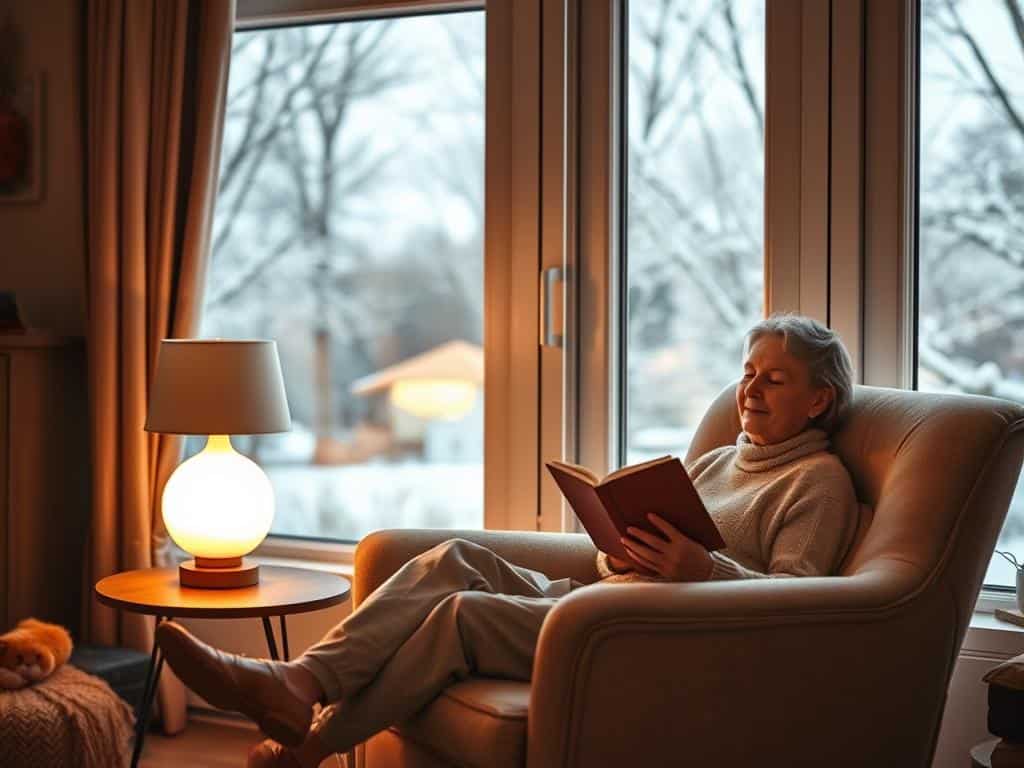
Did you know over half of people in areas with four seasons get the winter blues? This issue really affects our mental health. Seasonal Affective Disorder (SAD) impacts about 2-3% of people, with women more likely to suffer than men.
As winter comes, we look for ways to feel better. We try mood-boosting tips to fight off the winter blues. Understanding these conditions helps us find joy in the cold months.
There are many ways to feel better, like using light therapy or staying active outside. These methods help us stay emotionally well, even when it’s cold.
Key Takeaways
- Over half of people in four-season regions experience winter blues.
- Light therapy effectively alleviates SAD symptoms in 70% of patients.
- Cognitive-behavioral therapy proves effective in reducing SAD recurrence.
- Engaging in winter activities can shift one’s mood positively.
- A balanced diet and hydration support overall mental health.
- Strengthening social bonds can significantly improve mental well-being.
- Planning enjoyable activities helps in combating winter depression.
Understanding the Winter Blues and Seasonal Affective Disorder
When winter comes, many of us feel down due to shorter days and less sunlight. This feeling is called the winter blues. Some people just feel a little sad, while others have a more serious condition called Seasonal Affective Disorder, or SAD. It’s important to know about these to keep our minds healthy during the cold months.
Defining Winter Blues
The winter blues are a temporary feeling of sadness or tiredness during the cold, dark months. It can make you feel tired or irritable, often because of holiday stress or the change of seasons. It’s usually not too severe and doesn’t stop you from living your life.
What is Seasonal Affective Disorder?
Seasonal Affective Disorder is a serious form of depression that happens in the fall and winter. It’s caused by not getting enough natural light, which messes with our body’s clock and chemicals. About 5% of people in the U.S. get SAD each year, and it’s more common in women and those with a history of mental health issues.
Common Symptoms of SAD
Knowing the symptoms of SAD is key. They include feeling persistently sad, losing interest in things you used to like, feeling tired, and having trouble focusing. You might also gain weight and want to eat more carbs, which can make you feel worse. These symptoms can really affect your mental health, even more so if you already have mood disorders.
Effective Strategies to Boost Your Mood
Winter months can make us feel down, even for those with Seasonal Affective Disorder (SAD). There are many ways to feel better and stay mentally healthy during this time. I’ve found some practical tips to help lift your spirits and improve your overall well-being.
Embrace a Positive Mindset
Having a positive mindset is key to fighting off winter blues. I try to change negative thoughts into positive ones. I also choose activities that make me happy. Cognitive Behavioral Therapy for SAD (CBT-SAD) helps me deal with bad thoughts and stay positive. Being around positive people and things can make winter better.
Light Therapy as a Natural Remedy
Light therapy is a big help for SAD. Using a 10,000 lux light box for 20-30 minutes in the morning feels like natural sunlight. It helps about 70% of SAD patients, making it a great natural mood booster.
Engage in Physical Activity Outdoors
Being active, and doing it outside, is very important for my mood. Activities like brisk walking or yoga for at least 30 minutes, several times a week, really help. Being in nature not only keeps me physically fit but also clears my mind. It shows how important physical activity is for our emotional health.

Nourishment and Self-Care Practices
In the winter, taking care of my body with good food and self-care is key. A routine that includes eating well, staying hydrated, and self-care can fight Seasonal Affective Disorder feelings.
Eating Well for Improved Mental Health
Eating a balanced diet with fruits, veggies, whole grains, and healthy fats is vital. These foods give my brain the vitamins and minerals it needs. Programs like WIC help me find healthy recipes and buy ingredients that boost my mood.
Stay Hydrated
Drinking enough water is important for my health, fighting off winter sickness. It keeps my energy up and helps my body work right. When I’m feeling down, drinking water often makes me feel better.
Develop a Self-Care Routine
Having a self-care routine is key to a better mood. Mindfulness and meditation lower stress, and being outside gives me natural light and air. I love hobbies and making my home cozy to feel happy.
Staying in touch with loved ones, even online, helps me feel less alone. Focusing on self-care helps me deal with winter’s challenges better.
Conclusion
Facing the winter blues and knowing about Seasonal Affective Disorder is key for my mental health. I can fight the challenges of this season by using good mental health strategies. Mindfulness, light therapy, and staying active help a lot.
These methods not only make me feel better but also give me hope for the future. Taking care of my body with a healthy diet and self-care is also important. It helps both my mind and body.
Even though light therapy works for many, it’s different for everyone. Vitamin D therapy might be cheap, but it’s not proven to work well for SAD. This shows we all need our own plan.
If these steps don’t work, getting help from a professional is a big step. As winter comes, I’m ready with ways to stay strong and hopeful. I know better days are coming. This journey is not just about getting by; it’s about growing and thriving.


MOST COMMENTED
Lifestyle
Beat Winter Blues with These Mood-Boosting Tips!
Smart Living
How to Build a Smart Security System for Under $100
Home
Nature Indoors: The Rise of Biophilic Interiors
Outdoor
8 Flowering Shrubs That Will Transform Your Yard!
Smart Living
The Best Smart Gadgets to Upgrade Your Home Gym
Renovation
Build a Cozy Backyard Fire Pit in One Weekend!
Outdoor
The Beginner’s Guide to Composting!