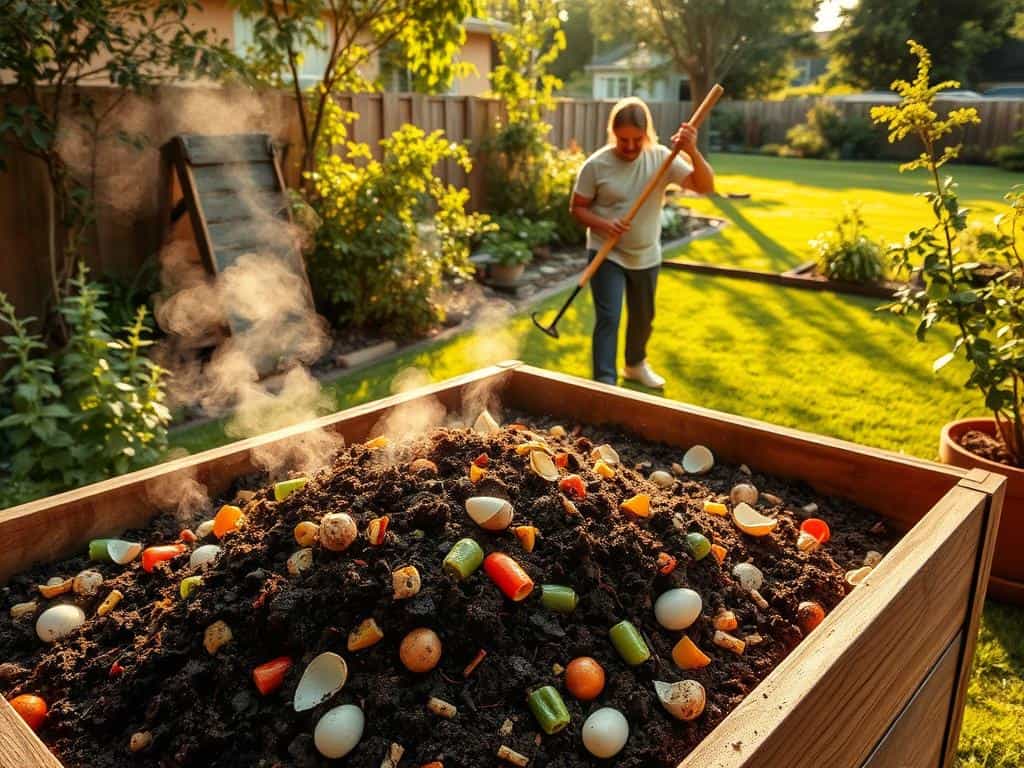
Did you know that nearly 50% of household waste is organic? By composting at home, I can cut down on landfill waste and make my garden soil better. Composting turns kitchen scraps and yard waste into “black gold” for gardeners. It’s a simple way to live more eco-friendly and help the environment.
Starting a composting system at home is easy and cheap. It’s a key step for anyone wanting to live more sustainably. In this guide, I’ll show you how to start composting successfully.
Key Takeaways
- Composting can reduce nearly 50% of household waste.
- It transforms kitchen scraps and yard debris into valuable compost.
- Understanding what to compost is key for success.
- Maintaining the right mix of materials promotes optimal composting.
- Regularly aerating the compost heap helps avoid unpleasant odors.
- Compost enhances soil health and reduces fertilizer needs.
Understanding the Basics of Composting
Composting is key to sustainability. It turns organic waste into fertilizer, making soil better. Knowing how composting works helps us improve gardens and cut down on waste.
What is Composting?
Composting turns waste into garden fertilizer. We collect kitchen scraps, yard waste, and plant debris. Then, we mix them to break down naturally.
It’s important to mix green materials like vegetable scraps with brown materials like leaves. This mix is key for good composting.
Benefits of Composting
Composting has many benefits. It reduces landfill waste and makes soil healthier. It also saves water and cuts down on chemical fertilizers.
By composting, we help the earth and make our gardens better. It’s a way to give back and grow healthy plants.
How Does Composting Work?
Composting uses aerobic decomposition. Microorganisms break down materials over time. Managing the compost pile is critical for this process.
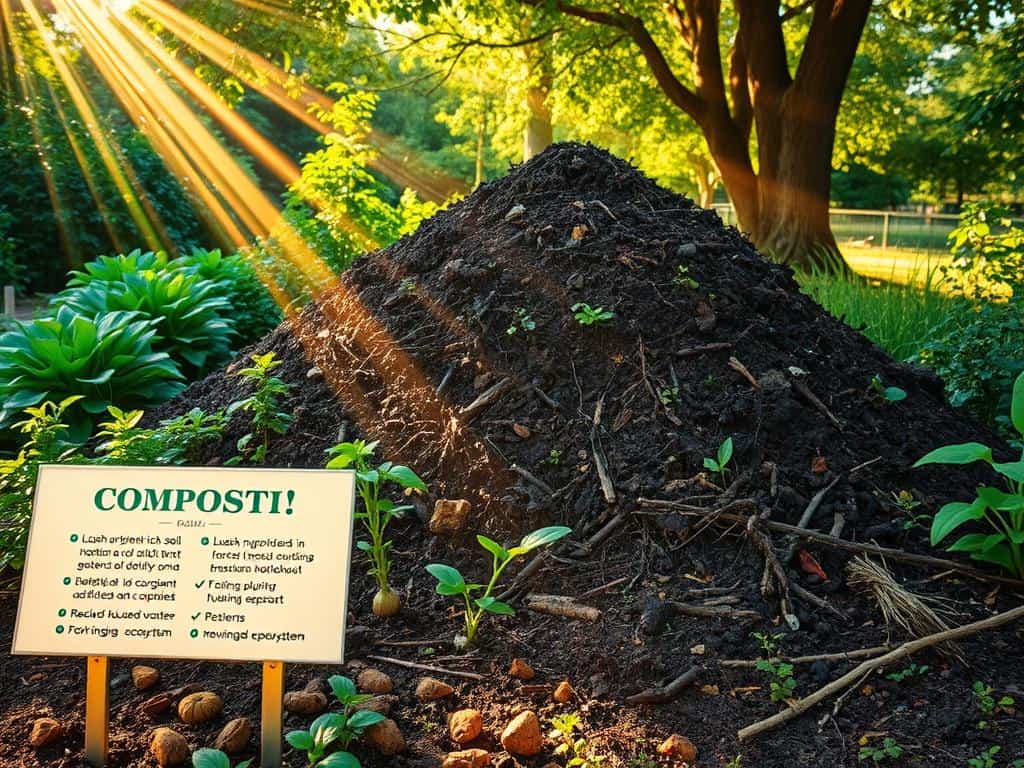
Compost piles can get very hot, up to 130°F. This heat helps break down materials faster. When it’s done, compost is dark brown and crumbly, with no bad smells.
Composting at Home: Steps to Get Started
Starting my composting journey means planning ahead. I need to pick the right method for my home. There are many options, each fitting different needs and spaces.
I can choose from traditional bins or try Bokashi or worm composting. These are great for smaller spaces.
Choosing Your Composting Method
When picking a method, think about airflow and sunlight. A good spot gets 3-4 hours of sun daily and is 2 feet away from fences. This ensures good air flow.
A bin that’s about 1 cubic yard is perfect for composting. If I live in an apartment, worm composting or Bokashi are good choices.
What to Compost
Knowing what to compost is key. Kitchen scraps like fruit and vegetable peels, coffee grounds, and eggshells are great. They make the compost rich in nutrients.
I should mix 3-4 parts browns (like leaves and paper) with 1 part greens (food scraps). This ratio helps break down the compost well. To keep my kitchen smell-free, I can store scraps in a sealed container or freeze them.
What Not to Compost
Some things should not go into my compost pile. I should avoid meat, dairy, and diseased plants. This keeps pests and harmful bacteria away.
By following these tips, I can make a compost system that helps my plants grow. It also reduces waste.
Conclusion
Composting at home is more than a task; it’s a way to care for my garden and help the planet. It lets me make my soil better and cut down on waste. Food scraps and yard waste make up a lot of landfill material, so composting helps a lot.
Setting up a compost system is easy and doesn’t cost much. Sometimes, it’s as cheap as $40. This saves money and helps the environment. It also means I don’t need to use harmful chemicals for my garden.
Composting is a journey that teaches patience and the importance of taking care of the environment. It makes me feel connected to nature and responsible for waste. Composting is a big step toward living sustainably and caring for our planet.

MOST COMMENTED
Outdoor
The Beginner’s Guide to Composting!
Lifestyle
From Coastal Calm to Urban Elegance: the Art of How to Host a Dinner Without Stress
Home
Beyond the Clutter: How to Store Things You Use Twice a Year to Reclaim Your Space for Creativity
Renovation
8 DIY Concrete Projects That Look Surprisingly Chic!
DIY
A No-nonsense Guide to Draught-proofing Old Windows Without Losing Their Character
Finance
Beyond the Numbers: Designing Your Financial Freedom by Understanding What a Credit Score Does and Does Not Mean
Smart Living
10 Budget-Friendly Smart Home Upgrades Anyone Can Do