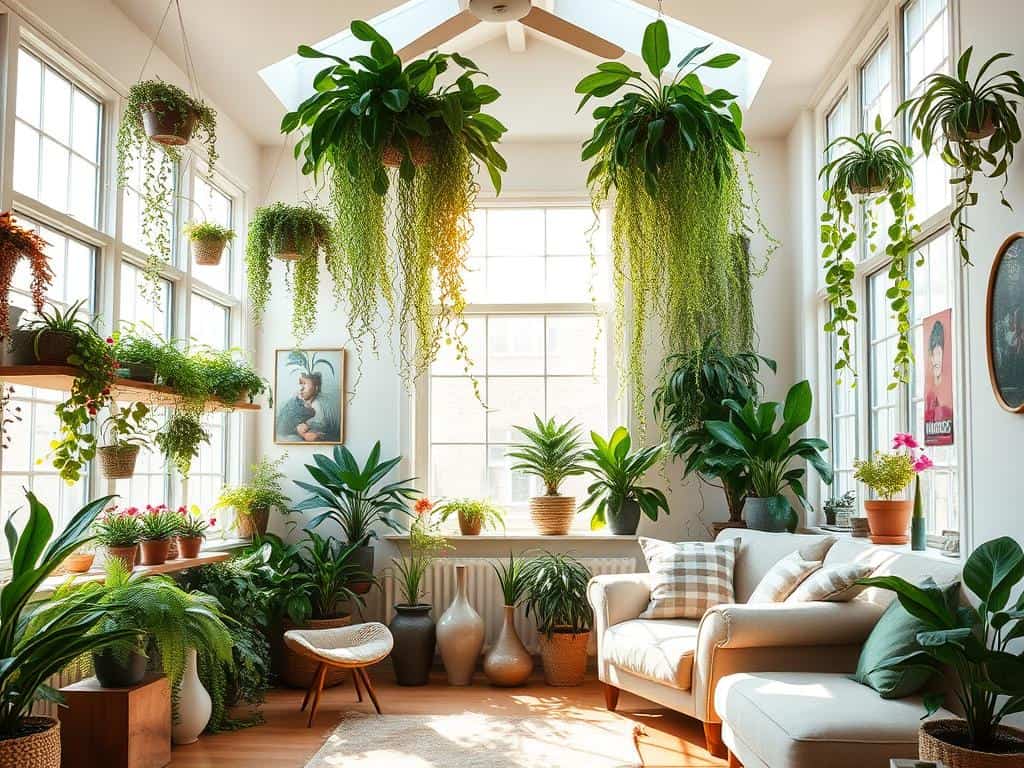
Did you know that adding biophilic design can boost workplace productivity by up to 15%? This shows how mixing nature with modern homes is more than a trend. It’s a big change towards healthier living spaces. As cities grow, biophilic design becomes key, focusing on natural light, plants, and eco-friendly living.
Biophilic design brings our homes closer to nature with features like living walls and big windows. It’s not just about looks; it makes us feel better and work better. This piece will explore how biophilic design can turn our homes and offices into caring spaces. These spaces mimic nature’s calm and offer real health perks.
Key Takeaways
- Biophilic design enhances indoor spaces by focusing on natural light, materials, and greenery.
- Adding indoor plants improves air quality and lowers stress.
- Natural materials support sustainability and connect us with nature.
- Living walls and vertical gardens clean the air and look great.
- Biophilic elements boost mental health and creativity at home and work.
- This design approach makes us happier by creating peaceful environments.
Understanding Biophilic Design
Biophilic design is a new way to make indoor spaces that connect us more with nature. It uses natural elements in a way that feels right. This idea comes from biologist Edward O. Wilson, who first used the term in 1984.
Historical Context and Origins
Biophilia’s roots go back to ancient times, where buildings were designed to blend with nature. The Art Nouveau style is a great example of this. It shows how buildings can work well with their surroundings.
Studies suggest our love for open spaces comes from our past. This shows we have a natural preference for places full of life and resources. This preference is important as we design our modern spaces.
The Connection Between Humans and Nature
The bond between humans and nature is key in biophilic design. It’s about feeling a strong connection to our surroundings. Places like the SFER IK art center in Mexico and the 1 Hotel in Nashville show how this works.
These places use natural materials and elements. They make us feel close to nature in a real way.
Key Principles of Biophilic Design
The main ideas of biophilic design are about mixing natural elements with built spaces. It’s about using sunlight, plants, and natural shapes to improve our experience. Buildings like the Édouard François in Nice and the Wardian London show how this works well.
Designers use greenery, natural textures, and understanding of place to make better spaces. These spaces can make us feel better, reduce stress, and spark creativity.
Benefits of Biophilic Design
Biophilic design is becoming more important as cities grow. Soon, 66% of the world will live in cities. Adding natural elements indoors is key for our mental health and well-being.
Impact on Well-Being and Mental Health
Studies show biophilic design lowers stress and improves heart rates. Being around plants and natural light boosts well-being by 15%. Just a few minutes outside can make us feel better and calmer.
Most people in North America and Europe spend their time indoors. So, it’s vital to bring nature inside for our mental health.
Enhancing Productivity in Workspaces
Biophilic design in offices boosts productivity by 6%. It also increases creativity by up to 15%. Features like green walls and natural light create a better work environment.
Biophilic design not only makes us happier but also reduces sick days by 10%. This shows how it improves both our well-being and work performance.
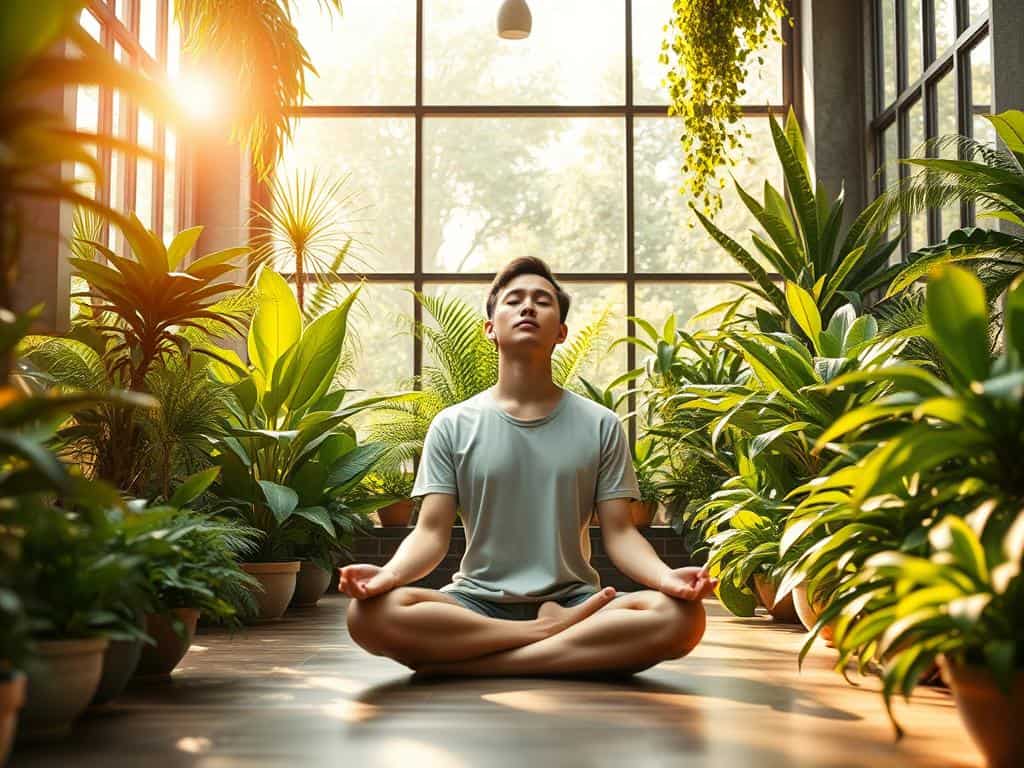
Biophilic Design in Home and Commercial Spaces
Biophilic design connects us to nature in homes and offices. It uses natural elements to bring calm and well-being. In homes, this means using organic materials, sunlight, and water to create peaceful spaces.
A well-designed home can be a haven. It lets people live in harmony with nature’s beauty.
Residential Applications
In homes, “prospect and refuge” is key. It makes spaces feel open yet safe, boosting comfort. Big windows, reclaimed wood, and good landscaping turn a house into a peaceful spot.
Adding indoor plants makes spaces look good and feel better. They help reduce stress and improve air quality. This is great for anyone wanting a calm and green home.
Innovative Commercial Implementations
In offices, biophilic design makes workspaces welcoming. Places like Bosco Verticale in Milan and One River North in Denver show how. They mix indoor and outdoor spaces well.
Features like living walls and bright atriums help employees feel good and work better. New tech helps manage natural light and plants. This makes offices greener and better for everyone.
Conclusion
The future of biophilic design looks bright for healthier, greener living and working spaces. It’s clear that adding natural elements to our areas is key. This approach not only looks good but also boosts our health and sharpens our minds.
Studies show that biophilic design, like using more natural light and plants, cuts down stress and anxiety. It makes us 15% more productive and less absent from work. This shows how important it is to design spaces that feel connected to nature.
As we talk more about design, let’s think about adding biophilic touches to our homes. Simple steps like adding plants or letting in more sunlight can strengthen our bond with nature. By doing this, we can turn our spaces into places that heal both body and soul.


MOST COMMENTED
Home
Nature Indoors: The Rise of Biophilic Interiors
Outdoor
8 Flowering Shrubs That Will Transform Your Yard!
Smart Living
The Best Smart Gadgets to Upgrade Your Home Gym
Renovation
Build a Cozy Backyard Fire Pit in One Weekend!
Outdoor
The Beginner’s Guide to Composting!
Lifestyle
From Coastal Calm to Urban Elegance: the Art of How to Host a Dinner Without Stress
Home
Beyond the Clutter: How to Store Things You Use Twice a Year to Reclaim Your Space for Creativity