
I was sitting in my favorite corner café last Tuesday, staring at a coffee-stained napkin where my latest floor plan had gone horribly, beautifully wrong. I had spent years being told that mastery is a straight, disciplined line—that every stroke must be intentional and every mistake must be corrected immediately. But as I looked at that messy, sprawling sketch, I realized that the most profound breakthroughs often come from the wreckage of our failed attempts. We are so terrified of looking foolish that we paralyze our own creativity, forgetting that knowing how to learn something badly on purpose is actually the secret to unlocking genuine innovation.
I’m not here to give you a polished, academic lecture on trial and error. Instead, I want to share the raw, uncurated lessons I’ve gathered from years of designing spaces that defy the “perfect” mold. I’m going to show you how to embrace the productive chaos of intentional failure to strip away your perfectionism and find your true creative voice. We’re going to ditch the rigid blueprints and learn to treat every mistake as a necessary layer of texture in your personal design journey.
Unlearning Perfectionism Techniques for a Braver Life
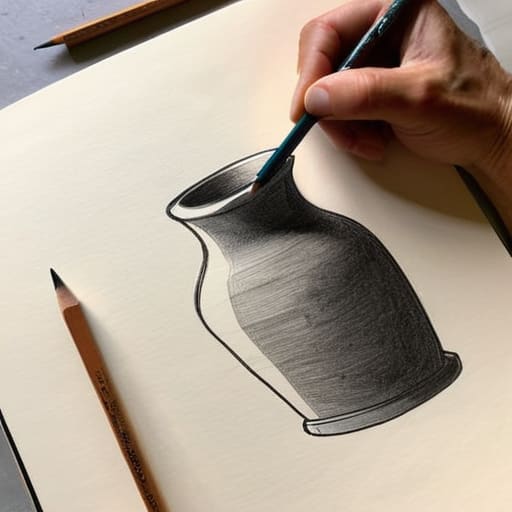
To truly embrace this, we have to start by dismantling the rigid scaffolding of “getting it right” the first time. I often find myself staring at a blank sketchbook, paralyzed by the fear that a single stray line will ruin the composition. To combat this, I’ve started using unlearning perfectionism techniques like the “blind contour” method—drawing an object without ever looking down at the paper. It’s messy, it’s often quite ugly, and it’s absolutely liberating. When you stop trying to curate a masterpiece, you finally allow your hand to move with a raw, uninhibited honesty that perfectionism usually stifles.
Beyond just sketching, I’ve begun applying these experimental learning methods to my actual design projects. Instead of obsessing over a flawless digital render, I’ll spend an afternoon building a clunky, “bad” physical model out of scrap cardboard and leftover driftwood. There are immense benefits of intentional mistakes here; by forcing myself to work with suboptimal materials and imperfect proportions, I stumble upon organic shapes and structural solutions I never would have found in a polished software program. It’s about breaking the cycle of being right to find something that is actually real.
The Benefits of Intentional Mistakes in Creative Chaos
When I’m sitting in a crowded café, my pen often slips, creating a jagged line where a straight wall should be. In my early design days, I would have erased that instantly, mortified by the “error.” But lately, I’ve realized that these slips are actually where the magic happens. There are profound cognitive benefits of error-based learning that we often overlook in our rush to be polished. When we stop trying to get it “right” immediately, our brains actually engage more deeply with the material. We aren’t just following a blueprint; we are reacting to the unexpected, which is where true innovation is born.
By embracing these messy moments, we utilize experimental learning methods that bypass the rigid, self-imposed boundaries of our training. It’s about breaking mental models through bad practice—deliberately choosing the “wrong” color palette or an asymmetrical layout just to see how the space breathes. This kind of chaos forces us to problem-solve in real-time, turning a potential mistake into a signature design element. It turns the act of creation from a stressful performance into a genuine, soulful discovery.
Five Ways to Embrace the Beautiful Mess of Imperfect Learning
- Swap your pristine sketchbook for a scrap of paper—or better yet, a used café napkin. When you remove the “preciousness” of your tools, you stop worrying about the final product and start focusing on the raw, uninhibited movement of the idea.
- Set a timer for ten minutes and commit to a “speed-run” of a new skill. The goal isn’t accuracy; it’s sheer volume. By forcing yourself to work faster than your inner critic can keep up, you bypass the urge to polish and dive straight into the grit.
- Purposefully choose the “wrong” medium for the job. If you’re trying to learn a new digital design tool, try sketching the concepts with messy charcoal first. This friction forces your brain to bridge the gap between intuition and technique, making the learning curve feel more organic.
- Invite a little bit of chaos into your environment. Instead of a perfectly curated, silent studio, try learning something new in a bustling park or a loud coffee shop. Embracing the external distractions teaches you to find your creative flow within the unpredictability of real life.
- Practice “The Ugly Version” first. Before you attempt to master a complex layout or a difficult technique, intentionally design the most clichéd, poorly proportioned, or mismatched version possible. Once you’ve conquered the fear of making something “bad,” the path to making something great feels much less intimidating.
Embracing the Beautiful Mess
At the end of the day, learning something badly is about more than just making mistakes; it’s about dismantling the rigid, suffocating structures of perfectionism that keep us from truly experiencing a new craft. By intentionally choosing a messy approach, we strip away the fear of judgment and allow ourselves to explore the unfiltered essence of a skill. We’ve seen how embracing creative chaos and finding value in our errors can actually accelerate our growth, turning what used to be “failures” into vital, textured layers of experience. It’s about trading that sterile, polished textbook approach for a more human, tactile way of knowing the world around us.
As I sit here in this little corner café, looking down at a particularly smudge-heavy sketch on my napkin, I’m reminded that the most breathtaking designs rarely come from a straight line. They come from the unexpected curves, the accidental spills, and the courage to let things be imperfect. So, I challenge you to go out and do something poorly this week. Pick up a brush, try a new language, or attempt a complex recipe without looking at the instructions. Stop trying to master the outcome and start falling in love with the process of being a beginner again. Let your life be a beautifully unrefined canvas.
Sometimes, the best way to embrace this kind of beautiful, unscripted chaos is to step away from the rigid structures of our daily routines and dive into something entirely unpredictable. I’ve found that when I’m feeling too stuck in my own head—obsessing over every single line in a floor plan—I need a way to reconnect with the raw, spontaneous energy of human connection. It’s a bit like letting go of a carefully curated mood board to see what actually happens when you just show up as you are. If you’re looking to break out of that cycle of overthinking and experiment with new, unplanned social rhythms, exploring something like casual dating georgia can be a surprisingly effective way to practice being present and embracing the messy, wonderful uncertainty of real-life interactions.



MOST COMMENTED
Outdoor
From Urban Chaos to Wilderness Calm: the Art of How to Pack a Hiking Backpack for a Seamless Escape
Home
High-End Bathroom Trends You’ll Want to Copy!
Technology
Protecting Your Digital Sanctuary: an Aesthetic Guide on How to Secure Your Home Wireless Network
Lifestyle
Beat Winter Blues with These Mood-Boosting Tips!
Home
A No-nonsense Guide to Removing Carpet Stains Without the Hype
General
A No-nonsense Guide to Starting a Vegetable Garden: From Urban Balconies to Real Harvests
Smart Living
How to Build a Smart Security System for Under $100