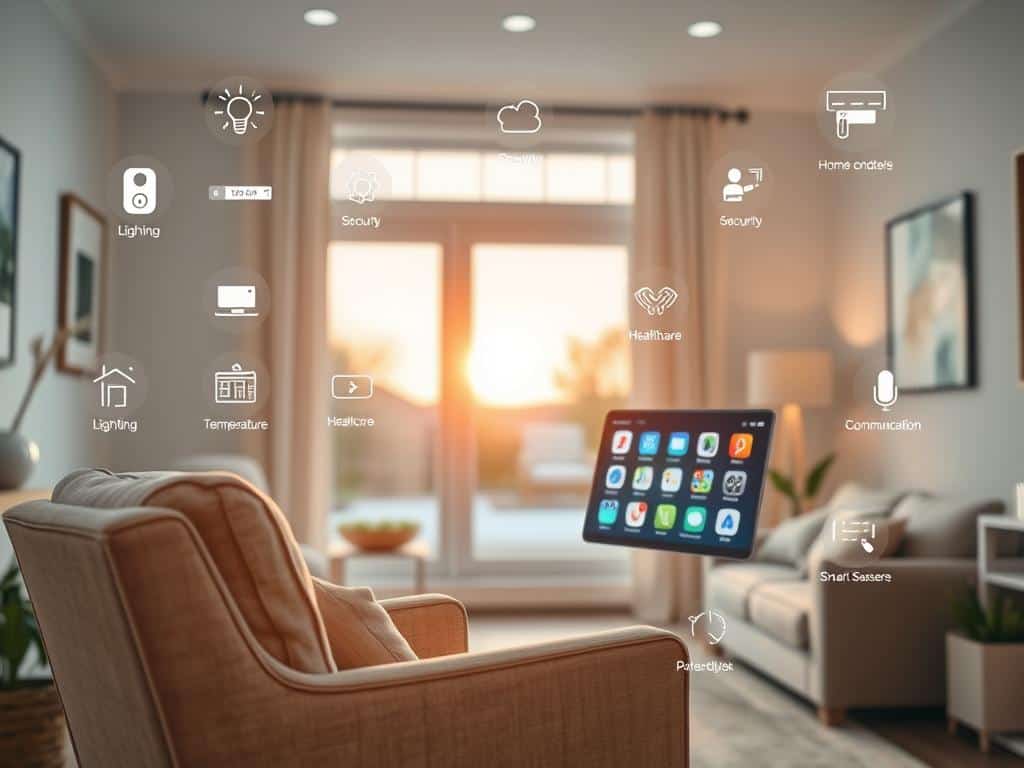
Did you know over 60% of seniors want to stay in their homes as they age? But, only 7% of homes are ready to support them. This shows how important smart home technology is for creating safe spaces for seniors.
Exploring Smart Home for Seniors solutions, I’m excited to show how tech can help seniors stay independent. With easy-to-use devices and apps, seniors can move around their homes easily. They can also stay in touch with doctors and family, all while feeling safe and comfortable.
Key Takeaways
- Smart home technology can significantly enhance safety and security for seniors.
- Integration of devices can promote independence in daily activities.
- User-friendly tech solutions enable smoother communication with family and healthcare services.
- Automated systems can adapt living environments to personal preferences, improving comfort.
- Accessibility features are critical for those with mobility or sensory impairments.
The Benefits of Smart Home Technology for Seniors
Smart home technology brings many benefits to seniors. The global market for these devices is expected to hit $165 billion by 2025. This growth is significant as more seniors are living longer, with those over 65 outnumbering those under 18 by 2034. These technologies can make seniors’ lives better, help them stay independent, and keep them safe.
Enhancing Safety and Security
Smart devices are key in keeping seniors safe. For example, smart smoke detectors like the Google Nest Protect alert caregivers in emergencies. They detect smoke and carbon monoxide. Smart locks let caregivers access homes remotely, without keys.
Video doorbells let seniors see who’s at the door. This reduces risks and boosts their security.
Promoting Independence
Smart home tech helps seniors stay independent. Devices like Amazon Echo and Google Home offer hands-free help. They manage appointments, remind of medication, and connect with family easily.
This technology fights social isolation, a big issue for seniors. It makes communication and socializing easier. Seniors can live more independently, improving their happiness and health.
Essential Smart Home Devices for Seniors
Keeping a home comfortable and safe is key for seniors. Smart home tech offers vital devices for their needs. Smart lighting and automated climate control make daily life better and safer. These tools make tasks easier and give peace of mind to seniors and their families.
Smart Lighting Solutions
Smart lighting boosts safety in a senior’s home. Smart bulbs let seniors control lights without getting up, cutting down on accidents. They can be turned on with voice commands or apps, making sure key areas are well-lit.
This easy access to lighting helps seniors stay independent and safe.
Automated Temperature and Climate Control
Automated climate control, like the Nest thermostat, keeps a senior’s home just right. These systems learn what temperature they like and adjust it automatically. Seniors don’t have to change settings themselves, which is a big help.
Being able to control the home’s climate from afar saves energy and keeps the atmosphere nice. This makes these devices very important for seniors.
Creating a User-Friendly Smart Home for Seniors
Making a smart home easy for seniors is key to improving their lives. The right tech makes it simple for them to live independently and comfortably. Voice control and simple setup are the main keys.
Simple Setup and Voice Control
Devices like Philips Hue lighting are easy to set up, making homes smart and safe. They use automated lighting and sensors for easy movement and security. Voice-activated plugs, like Kasa, let seniors control appliances without effort, reducing strain.
Smart thermostats, like TURN, adjust temperatures based on use, keeping homes comfortable. Platforms like Vivint offer control over security, lighting, and climate, tailored to seniors’ needs.
Voice control lets seniors do more on their own. AI assistants, like ElliQ, remind them of daily tasks and health checks. Devices like Fitbit and Apple Watch track health and alert for falls, keeping seniors safe.
By using voice control, simple setup, and easy-to-use tech, we can make smart homes a reality for seniors. This greatly improves their daily lives.
Smart Home for Seniors: Tips for Caregivers
Using smart home technology can really help seniors feel safer and more comfortable. As a caregiver, I’ve found that certain strategies make it easier to help seniors use technology. Here are some tips for using tech to improve senior care.
Monitoring and Alerts
Monitoring technology is key to keeping seniors safe. Devices like smoke detectors and fall detectors can alert caregivers to dangers. For example, the Google Nest Protect alerts up to nine people in case of smoke and has a night-light for safety at night.
Wearables, like the Apple Watch SE, can detect falls and send help. This technology gives me peace of mind and helps me act fast if there’s a problem.
Encouraging Use of Technology
Getting seniors to use technology takes patience and creativity. I start by introducing devices slowly and showing them how to use them. Smart speakers, like the Echo Dot, can help with reminders and make talking to family easier.
Setting routines, like using a smart thermostat, helps seniors get used to tech. This makes them more independent and connected to the world. Solutions that are safe and easy to use help my loved ones do well in today’s world.
Conclusion
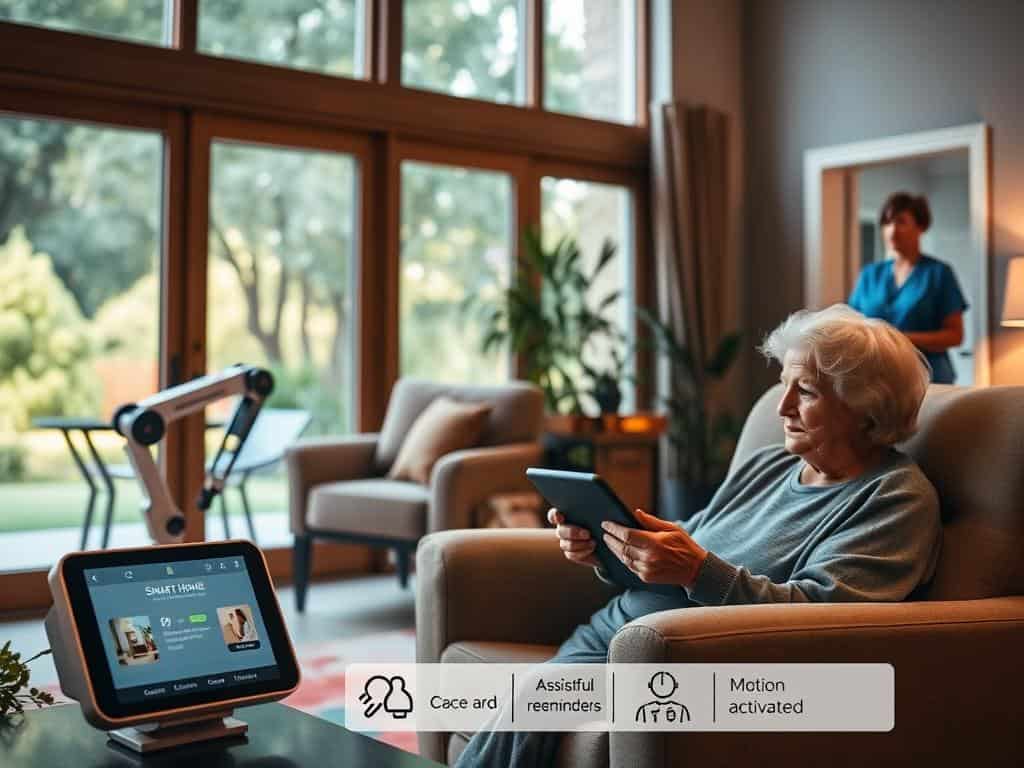
Smart home technology is changing the lives of seniors in big ways. It makes their lives safer and more independent. This is key as more Canadians will be over 65 by 2037.
Studies show seniors are open to new tech that improves their lives. They like systems that keep them safe without invading their privacy. This is a win-win for both seniors and their caregivers.
The future of smart homes for seniors looks bright. We’ll see more AI and machine learning, making homes more efficient and easy to manage. This technology is not just a tool; it’s a way to a better life for seniors. It brings peace of mind to families and caregivers too.

MOST COMMENTED
Smart Living
10 Budget-Friendly Smart Home Upgrades Anyone Can Do
Home
Glass Walls: The Future of Modern Home Interiors
Lifestyle
7 DIY Ways to Instantly Reduce Stress!
Smart Living
Alexa vs. Google Home – Which Smart Speaker Wins?
Outdoor
How to Set Up an Outdoor Movie Night!
Lifestyle
How to Improve Focus & Mental Clarity Fast!
Home
Forget Minimalism! How to Nail Maximalist Style