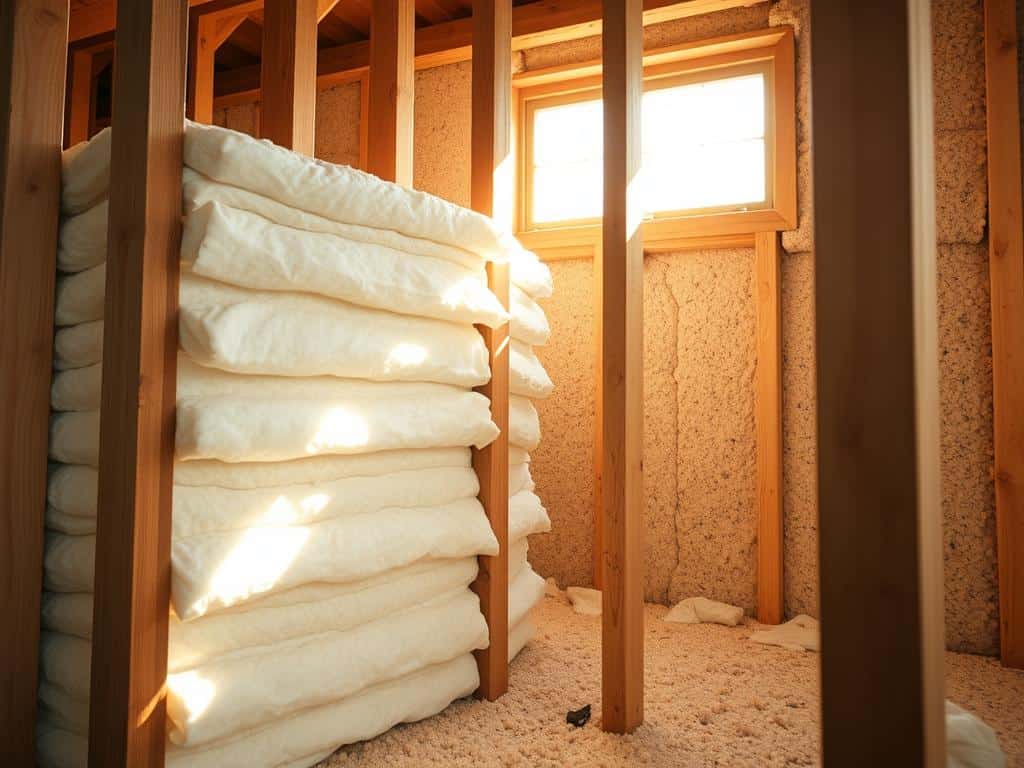
Did you know that 90% of U.S. homes are under-insulated? This is a big oversight and a chance to save money. Insulating your home can cut heating and cooling costs by 10% to 45%. As winter comes, good insulation is more important than ever.
In this article, I’ll show you how to improve your home’s insulation. We’ll cover the basics, how insulation works, and how to make your home more comfortable and energy-efficient.
Simple projects like adding window kits or making a DIY door snake can help. We’ll look at the best materials, where to insulate, and how to do it right. Your home will be cozy and use less energy.
Key Takeaways
- A staggering 90% of homes in the U.S. suffer from inadequate insulation.
- DIY insulation projects can result in significant energy cost savings.
- Investing in window insulation kits and reflective foil can be cost-effective.
- Insulating attics and crawl spaces plays a critical role in reducing heating expenses.
- Using thick curtains can greatly enhance heat retention in your home.
- Researching local R-value recommendations is vital for optimal insulation performance.
Understanding the Importance of Insulation
Insulation is key to a home’s energy efficiency. It slows down heat transfer, keeping your home comfy all year. By insulating well, you can cut down on energy use, saving a lot of money. It also makes your home more eco-friendly.
How Does Insulation Work?
Insulation traps air in its fibers, slowing heat flow. This is vital in both cold and hot seasons. It keeps warm air in during winter and cool air in during summer. The R-value measures insulation’s effectiveness, with higher values meaning better energy saving.
Benefits of Insulation for Energy Savings
Adding insulation to your attic and foundation can save a lot on energy bills. Studies show homeowners can cut heating and cooling costs by 15% with good insulation. In older homes, insulation can lead to even more savings, making your home more comfortable and eco-friendly.
Key Areas to Insulate
Focus on insulating the attic, walls, and foundation. Attic insulation can cut energy costs by 10% to 50%. Foundation insulation is also important, as it reduces heat loss and improves air quality. These areas often lose a lot of energy, causing drafts and uneven temperatures.
Home Insulation DIY: Effective Techniques
Starting a DIY insulation project needs careful planning and the right materials. Knowing what makes insulation effective can make the task easier. For your attic, consider using fiberglass batts or cellulose. They offer great R-values to keep your home warm in cold months.
Materials and Tools Needed
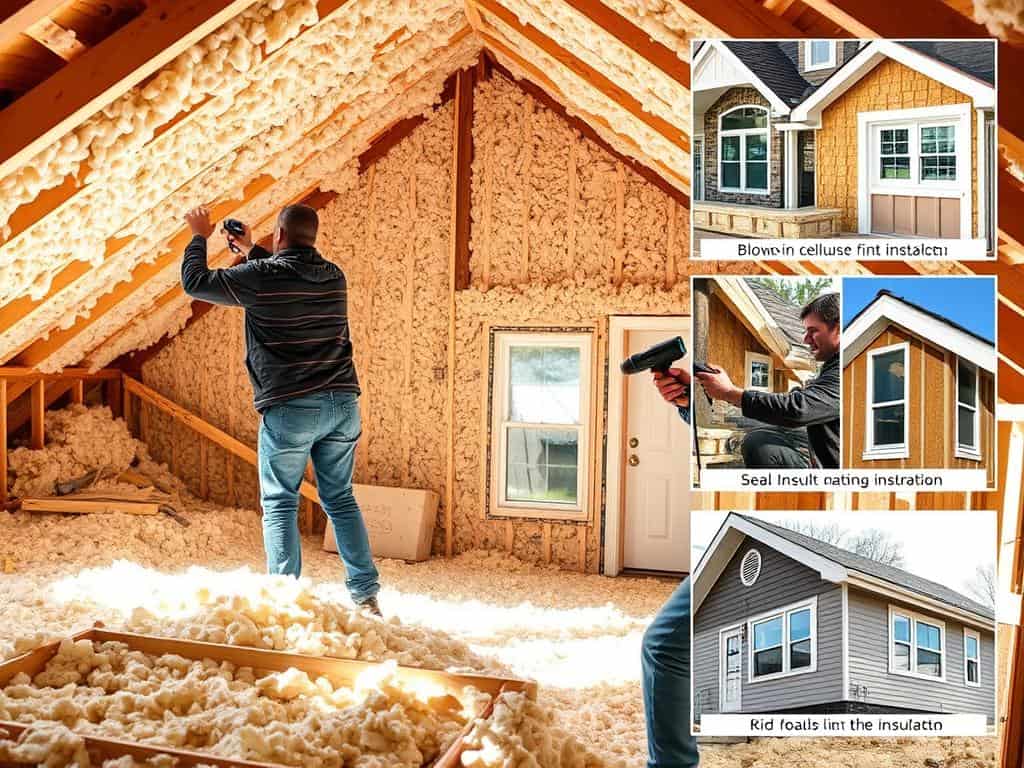
First, I gather essential materials like fiberglass batts or loose-fill cellulose. I also have spray foam for hard-to-reach spots. The right tools are key, so I use a utility knife, staple gun, and air sealing tools. Safety is important, so I wear gloves, goggles, and a mask.
Steps to Insulate Your Attic
I start by removing old insulation and getting the space ready. I make sure to use the right R-value for my area, as suggested by Energy.gov. For example, cellulose needs about 4 inches to reach an R-value of 14.
After installing the insulation, I seal any air gaps. This step is important to prevent energy loss. It can save a lot on heating and cooling costs.
Sealing Air Gaps
Sealing air gaps is key to reducing energy loss. I check around windows and doors for leaks. Using the right tools, I fill these gaps, making sure my home stays airtight and comfortable.
Strategies for Maximizing Energy Efficiency
Improving energy efficiency is more than just adding insulation. It’s about combining insulation with air sealing. This approach greatly reduces air leaks, boosting my home’s insulation and saving energy. I can choose between DIY insulation or professional services based on the project’s complexity.
Combining Insulation and Air Sealing
I focus on sealing air leaks around windows, doors, and outlets. This step eliminates drafts and boosts insulation performance. Insulation types like rigid foam board offer strong thermal barriers, keeping temperatures stable indoors.
Blown-in insulation for odd-shaped areas adds to the effectiveness. Using these methods together can lead to big energy savings. This makes energy efficiency strategies more effective.
Choosing Professional Help vs. DIY
DIY insulation advice can help with some projects. But, I see the benefits of professional insulation services, like for spray foam. This insulation needs skilled installation to work best.
Professional services also ensure I follow local building codes. This gives me peace of mind. I consider the ease of hiring experts versus the satisfaction of doing it myself, based on my skills and the project’s complexity.
Conclusion
In my quest to make my home more energy-efficient, I found that insulation is key. I’ve focused on the attic and basement. This has brought big benefits, like saving up to 15% on heating and cooling costs, as the Environmental Protection Agency says.
This change has made my home more comfortable. It also cuts down on utility bills and energy waste.
At first, the cost of insulation, between $1,065 and $2,630, seemed high. But, the long-term savings and higher home value make it worth it. Insulated homes are not only energy-efficient but also more valuable, showing that insulation is a smart investment.
Regular checks for air gaps and keeping insulation in good shape also boost energy efficiency. Working with experts like MAG Insulation ensures my home gets the best insulation for its needs. This makes my home more comfortable and eco-friendly.
By focusing on insulation and air sealing, I’m not just improving comfort. I’m also investing in a greener future.


MOST COMMENTED
Smart Living
10 Budget-Friendly Smart Home Upgrades Anyone Can Do
Home
Glass Walls: The Future of Modern Home Interiors
Lifestyle
7 DIY Ways to Instantly Reduce Stress!
Smart Living
Alexa vs. Google Home – Which Smart Speaker Wins?
Outdoor
How to Set Up an Outdoor Movie Night!
Lifestyle
How to Improve Focus & Mental Clarity Fast!
Home
Forget Minimalism! How to Nail Maximalist Style