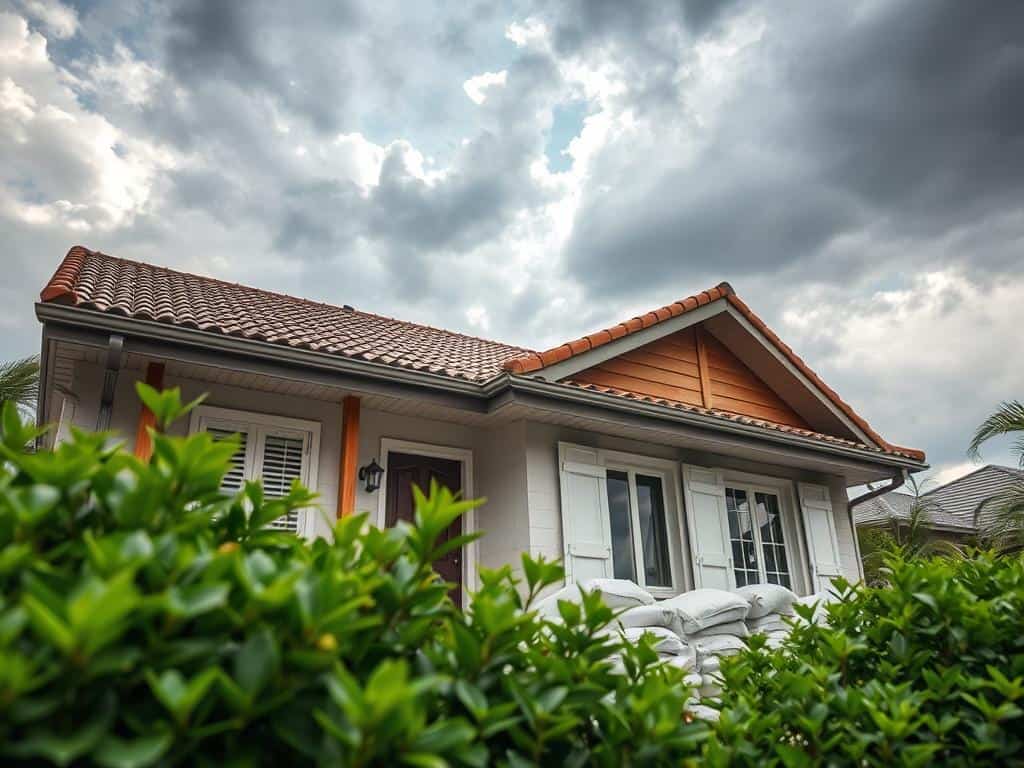
Did you know that lightweight patio furniture and garden decor can easily become dangerous projectiles in high winds? The National Weather Service says unsecured items can cause a lot of damage. They turn everyday objects into hazardous debris during severe weather.
As a homeowner, I know that keeping my home safe doesn’t have to cost a lot. DIY stormproofing techniques can help protect my home without spending a lot. By checking my home’s weak spots and taking action, I can lower the risk of damage. Whether it’s making my roof stronger, securing windows, or managing my landscape, every effort helps.
Key Takeaways
- Secure loose outdoor items like furniture and decor to prevent them from becoming projectiles.
- Install storm shutters to safeguard windows from flying debris.
- Use weather-resistant and fire-retardant materials during home renovations.
- Keep gutters clear to avoid clogs and prevent water damage during storms.
- Develop an emergency plan, including essential supplies, evacuation routes, and alerts for approaching storms.
Understanding the Importance of Home Preparation for Storms
To face severe weather with confidence, I focus on thorough home preparation. This not only protects my property but also keeps my family safe during storms. The first step is to identify any weaknesses in and around my house.
Assessing Your Home’s Vulnerabilities
I start by checking my roof, the first line of defense against storm damage. I look for missing or damaged shingles, cracks, and holes to prevent water from getting in. To strengthen my roof, I consider installing waterproof underlayment or hurricane straps.
Then, I examine my windows and doors, key entry points for wind and rain. Impact-resistant glass not only guards against debris but also keeps energy in. Weatherstripping around windows and doors also helps seal them better and reduces wind damage.
Don’t forget to check your garage door, often overlooked. A stable garage door adds extra protection, as it can withstand strong winds. I make sure to secure outdoor furniture or items that could become dangerous during storms.
Lastly, I inspect my home’s foundation. I look for cracks or signs of shifting, which could weaken the structure. Installing proper drainage systems, like French drains, helps keep water away from my home, making my emergency plan stronger.
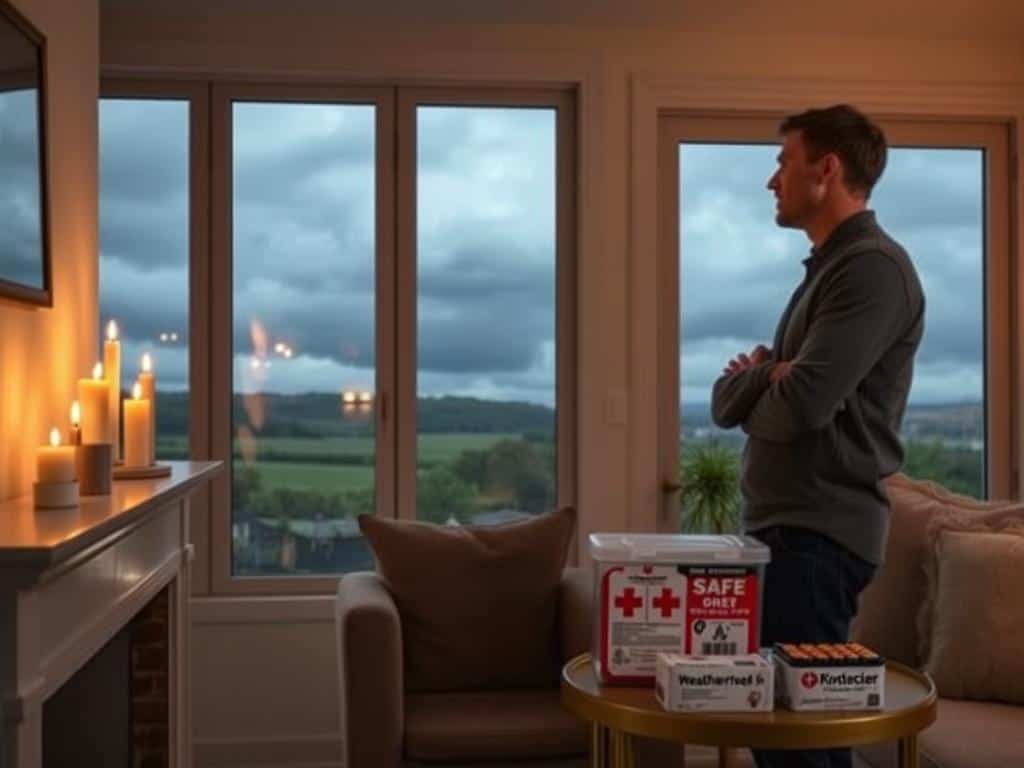
DIY Stormproofing Techniques for Home Safety
Improving my home’s storm resistance is key to safety and less damage. DIY stormproofing methods can make my home safer during bad weather. These include reinforcing the roof, securing windows and doors, and more.
Reinforce Your Roof
Regular roof checks are essential. Look for loose shingles or tiles and fix them fast. Roof straps or weather-resistant tape can seal gaps well.
Clear gutters of debris to avoid water damage. This helps with water drainage and protects the structure.
Strengthen Windows and Doors
Installing storm shutters or impact-resistant film on windows is a good idea. These protect glass from debris. Reinforcing window frames with strong materials adds extra protection.
Weather stripping can seal gaps, keeping drafts out. This helps keep your home comfortable during storms.
Secure Your Garage Door
Securing my garage door is important for home safety. Adding extra bracing makes it stronger against wind. A strong garage door protects my vehicles and belongings during bad weather.
Proper Sealing Techniques
Using the right sealing methods can prevent water damage. Weather stripping and caulk around doors and windows seal gaps. This improves energy efficiency and keeps my home safe.
Landscape Awareness and Maintenance
Good landscaping is key to storm preparedness. Trimming trees and securing outdoor items helps avoid wind damage. Knowing my outdoor space helps direct rainwater away from my foundation.
Choosing strong plants and creating windbreaks can also protect my home from storms.
Conclusion
Effective storm damage prevention starts with knowing my home’s weak spots. I can make my home safer by strengthening the roof, securing windows and doors, and keeping garage doors closed. Options like metal roofing can handle winds up to 140 mph, while architectural shingles are a cost-effective choice with long life.
Having good drainage systems is key to keep water away and avoid flooding. Regular checks on systems like hurricane shutters and backup generators are also important. Even though storm-proofing can cost between $10,000 to $20,000, there are ways to finance it.
Being prepared is more than just protecting my home; it’s about feeling secure. Keeping my yard tidy and securing outdoor items helps prevent damage from flying debris. While a completely storm-proof home might be hard to achieve, taking steps to protect it is essential. This way, I can keep my property and family safe from nature’s surprises.


MOST COMMENTED
Renovation
10 DIY Ways to Protect Your Home from Storm Damage
Finance
Designing Your Financial Canvas: How to Create a Monthly Budget That Balances Urban Ambition With Serene Stability
Lifestyle
How to Stay Motivated on Your Weight Loss Journey!
Outdoor
From Urban Chaos to Wilderness Calm: the Art of How to Pack a Hiking Backpack for a Seamless Escape
Home
High-End Bathroom Trends You’ll Want to Copy!
Technology
Protecting Your Digital Sanctuary: an Aesthetic Guide on How to Secure Your Home Wireless Network
Lifestyle
Beat Winter Blues with These Mood-Boosting Tips!