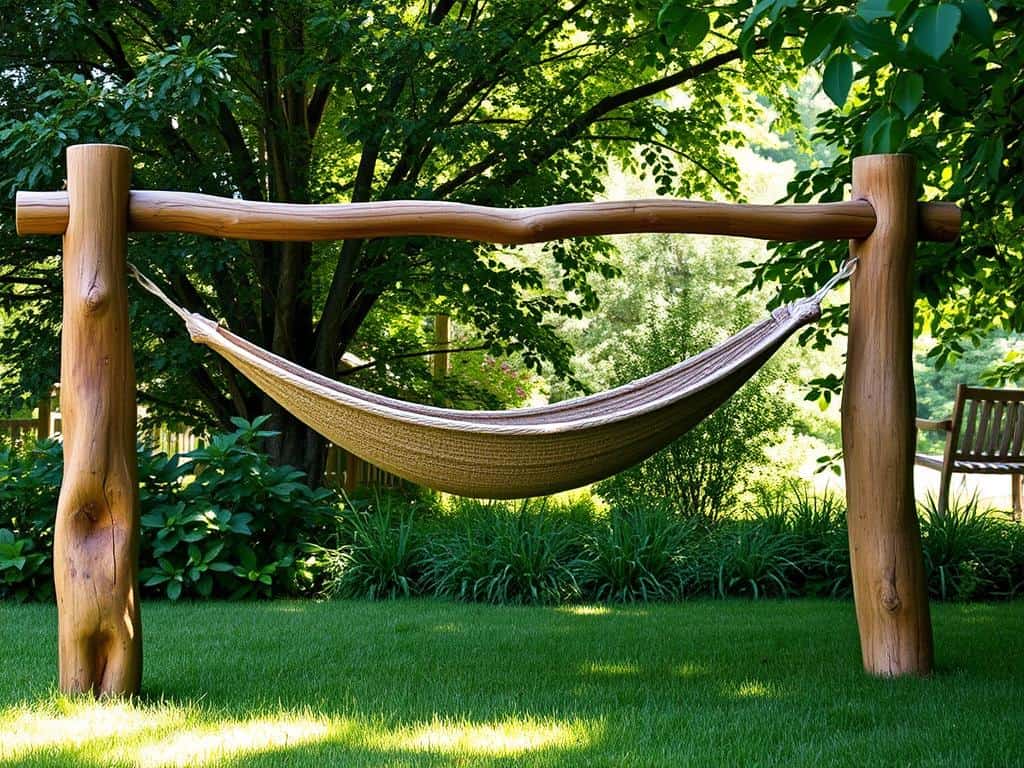
Did you know you can make your own hammock stand for just $40? You can turn your backyard into a cozy paradise for relaxation. Summer is coming, and this project is perfect for making your outdoor space better.
It’s not just about saving money. A DIY hammock stand can also be customized to fit your style. You can choose from simple to elaborate designs, like adding pergolas or planters. It’s a fun project that brings comfort and style to your home.
Key Takeaways
- Building a DIY hammock stand can be both cost-effective and rewarding.
- Materials such as redwood, treated lumber, and plywood can be used.
- Additional features like pergolas or projector screens can enhance your design.
- You can easily adapt the stand for sun or shade with its lightweight yet sturdy structure.
- Essential tools include a circular saw, power drill, and various hardware components.
- Applying an exterior-grade finish ensures your hammock stand withstands the elements.
Getting Started with Your DIY Hammock Stand
Starting my DIY hammock stand project is thrilling. First, I need to collect the right tools and materials. It’s important to have the correct tools for a good build. I’ll use a miter saw or circular saw, a drill and driver, and a speed square for precise cuts and angles.
Tools & Materials Needed
For the materials, treated 4×4 posts are a great choice. I’ll use four 4x4x8 beams for support. Two 2x4x8 rails will add stability. I’ll need twelve 3/8×8″ galvanized bolts, nuts, and washers for assembly.
Heavy-duty screws and eye bolts will secure my hammock. A post hole digger and Quikrete will help set the posts in the ground.
Understanding the Design
It’s key to understand the hammock stand design for safety and function. The posts should be about 15 feet apart for good hammock tension. The bolt eyes will be 57 inches from the ground for easy access and safety.
I’ll use a sycamore ridgepole, attached with a ‘T’ hinge, for stability and looks.
Step-by-Step Instructions for Your DIY Hammock Stand
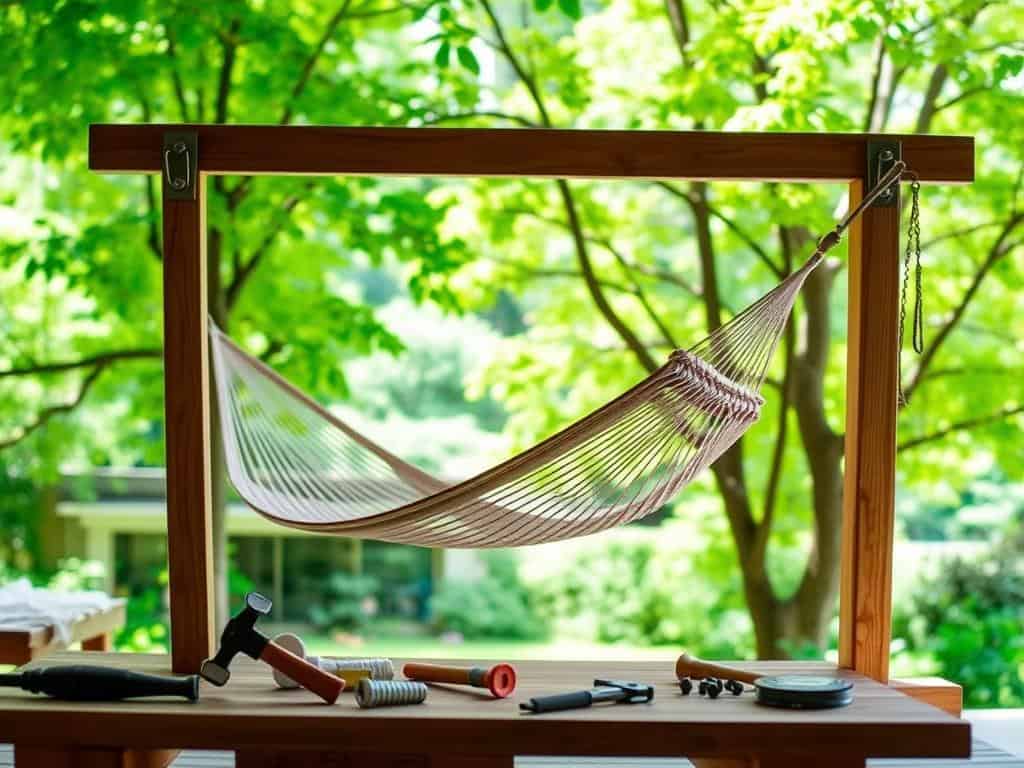
Building a hammock stand is fun and rewarding. It’s great for setting up an outdoor relaxation area. I’ll show you how to make a sturdy and stylish hammock stand step by step.
Cutting the Boards to Length
Start by measuring and cutting your 4×4 timber. Each piece needs to be cut accurately. The long frame should be 86 inches, and the short base 34 inches.
These lengths are key for a solid structure.
Assembling the Arms and Frame
Then, build the two arms by sandwiching the boards with Timberlok screws. Once the arms are done, focus on the frame. Use a color-coded diagram for clarity.
This helps you see how everything fits together perfectly.
Securing the Base and Adding Supports
Next, secure the base with centered feet. Pay attention to measurements to avoid stability issues. Angle the side supports and fasten them securely.
This ensures balance and beauty. Add stainless steel eye screws for hammock anchors. After finishing, you can relax in your new outdoor setup.
Conclusion
Building my own DIY hammock stand was incredibly rewarding. It changed how I enjoy my outdoor space. I loved the challenge of making something from scratch.
The end result looks great and works well, making it perfect for relaxing. The TurtleDog design was easy to set up, thanks to its light build. This makes me think others can do the same with their DIY projects.
I used strong materials like pressure-treated lumber for my stand. It’s both durable and looks good. My grandkids tested it, and it was stable, even when they made it sway a bit.
Keeping it up with regular checks and stain keeps it looking good for years. I’m confident my stand will last a long time.
Different designs, like the Simple A-Frame or Adjustable stand, let you choose what you like. My stand can hold 300-400 pounds, making it perfect for relaxing. It’s shown me that building something yourself is very rewarding.


MOST COMMENTED
Smart Living
10 Budget-Friendly Smart Home Upgrades Anyone Can Do
Home
Glass Walls: The Future of Modern Home Interiors
Lifestyle
7 DIY Ways to Instantly Reduce Stress!
Smart Living
Alexa vs. Google Home – Which Smart Speaker Wins?
Outdoor
How to Set Up an Outdoor Movie Night!
Lifestyle
How to Improve Focus & Mental Clarity Fast!
Home
Forget Minimalism! How to Nail Maximalist Style