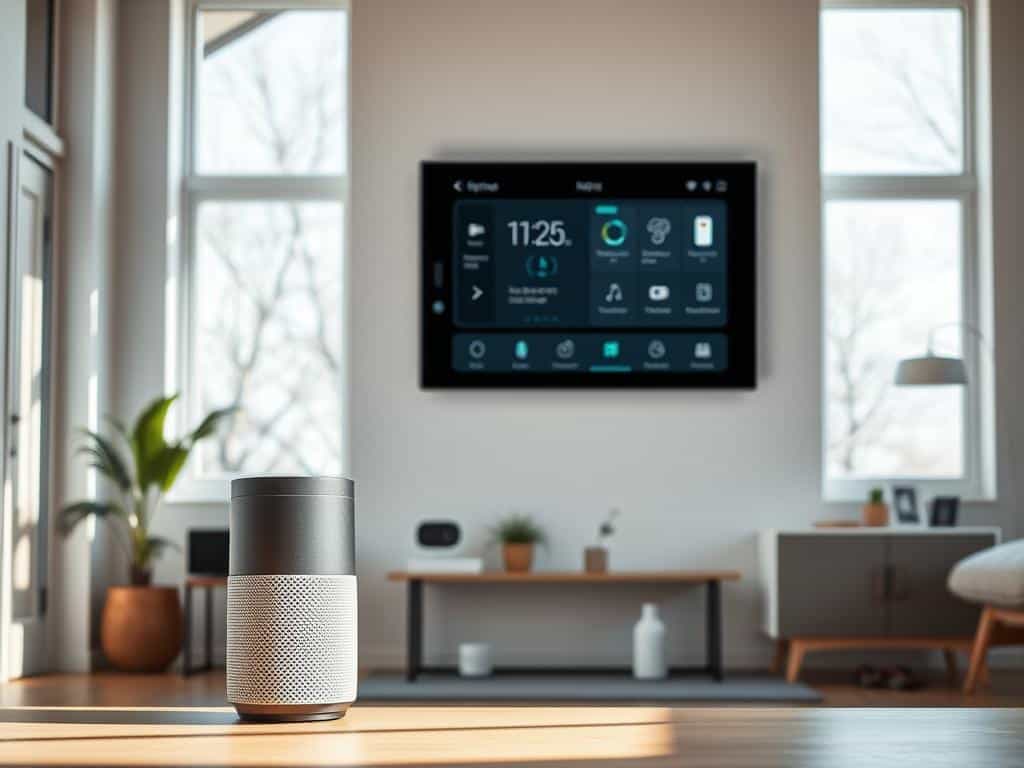
Did you know over 60% of U.S. households have at least one smart device? As we use more automation, making our homes smart is key. Devices like smart speakers, cameras, and locks make life easier. But the real magic is when they all work together.
To make this happen, pick the right platforms and ensure devices can talk to each other. This creates a unified space that makes daily tasks simpler. In this guide, I’ll show you how to get all your smart devices to work together for a better smart home.
Key Takeaways
- Evaluate your needs to identify areas for automation like energy efficiency and safety.
- Choose devices that support communication protocols such as Zigbee, Z-Wave, Bluetooth, or Wi-Fi.
- Consider ecosystems like Amazon Alexa, Google Assistant, or Apple HomeKit for easy integration.
- Use a smart hub like Samsung SmartThings or Google Nest Hub to manage multiple devices.
- Optimize your network by upgrading to a dual-band or tri-band router for improved connectivity.
- Automate routines using voice assistants or platforms like IFTTT to create personalized sequences.
Choosing the Right Platform for Smart Home Integration
Starting your smart home journey means picking the right platform. It’s key to know which devices work well together. Smart home hubs like Amazon Alexa, Apple Home, Google Home, and Samsung SmartThings help manage your devices.
Understanding Compatibility
Before picking a platform, check your current devices. Look for compatibility logos. Using a Matter-compatible hub makes devices from different brands talk to each other.
Platforms like Samsung SmartThings focus on working with many devices. Home Assistant is perfect for those who want to customize and keep their data private.
Popular Smart Home Platforms
Each platform has its own strengths. Amazon Alexa is great for voice control. Google Home excels in smart assistant tasks. Apple Home is ideal for Apple users, ensuring a seamless experience.
For more complex setups, Hubitat offers local control. This balances ease of use with privacy. Each platform benefits from strong smart home hubs.
Brand Considerations
Choosing devices from the same brand makes things easier. Keep an eye on brands that work with your platform. Devices using ZigBee or Z-Wave standards ensure reliable connections.
Focus on brand integration for a smooth smart home experience. This makes using your technology simple and enjoyable.
Connecting Your Devices: Steps for Successful Smart Home Integration
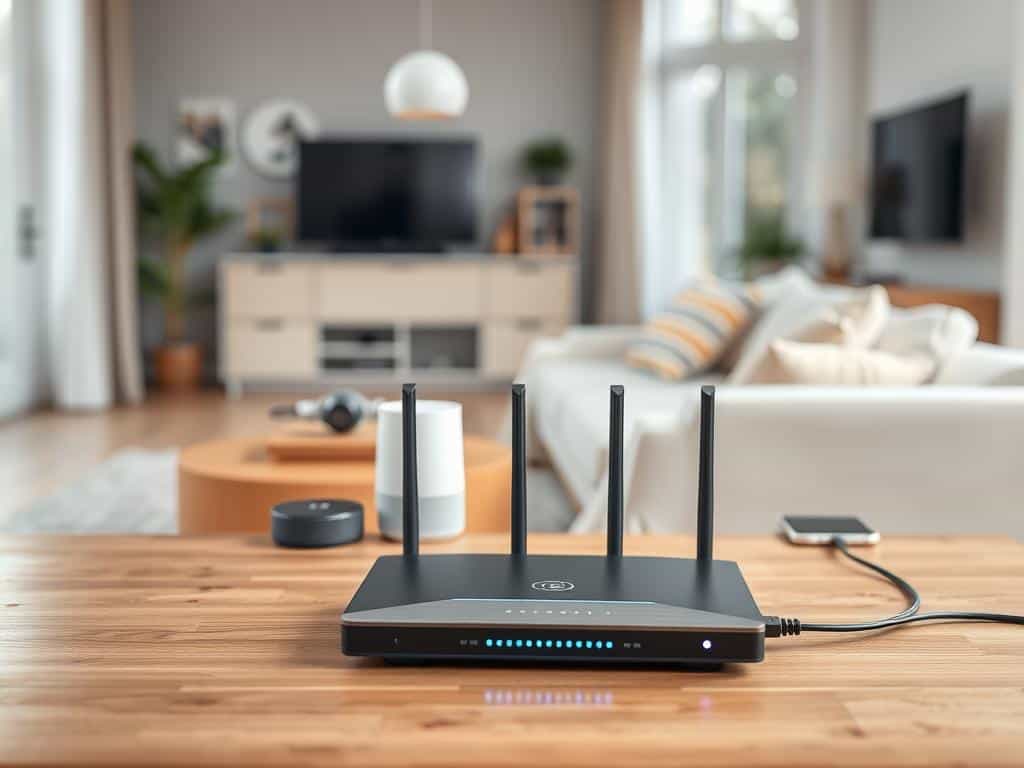
Setting up smart devices can seem hard, but it’s easier than you think. First, knowing what network you need is key. A strong Wi-Fi connection is a must for devices to talk to each other well. Choose the right Wi-Fi band, like 2.4 GHz or 5 GHz, based on your devices.
Network Requirements
A good Wi-Fi network is essential for smart home integration. I often choose Wi-Fi 6E for better speed. For devices using Zigbee or Z-Wave, a compatible hub can help. Always use strong passwords and separate IoT networks for security.
Pairing Devices with Your Hub
Pairing devices is a big step in setting up your smart home. Using a hub like Google Home or Amazon Echo makes it easier. This hub connects all your devices, making them work together smoothly. Make sure each device works with your hub and follows the right protocols. If you have trouble, check your Wi-Fi or reset devices if needed.
Creating Routines and Groups
After pairing, organize your devices into groups for easier control. For example, I make groups like “living room lights.” This makes it simple to set up routines. Routines, like turning lights on at sunset or adjusting the thermostat, make your home smarter and more convenient.
Conclusion
Smart home integration changes my daily life for the better. I pick devices and platforms that work well together. This makes my home run smoothly and efficiently.
Having a strong network is key to keeping my devices safe. It stops hackers from getting in. This keeps my home secure.
Setting up my devices to work together makes life easier. For example, smart lights and thermostats save energy and make my home cozy. I’m always looking for ways to make my home smarter and safer.
The future of smart homes looks bright. We’ll see new AI and energy-saving tech. My home will get smarter and better at meeting my needs.
Smart tech makes my home safe, efficient, and tailored to me. It makes every day better. I’m excited to see what’s next for smart homes.


MOST COMMENTED
Smart Living
10 Budget-Friendly Smart Home Upgrades Anyone Can Do
Home
Glass Walls: The Future of Modern Home Interiors
Lifestyle
7 DIY Ways to Instantly Reduce Stress!
Smart Living
Alexa vs. Google Home – Which Smart Speaker Wins?
Outdoor
How to Set Up an Outdoor Movie Night!
Lifestyle
How to Improve Focus & Mental Clarity Fast!
Home
Forget Minimalism! How to Nail Maximalist Style