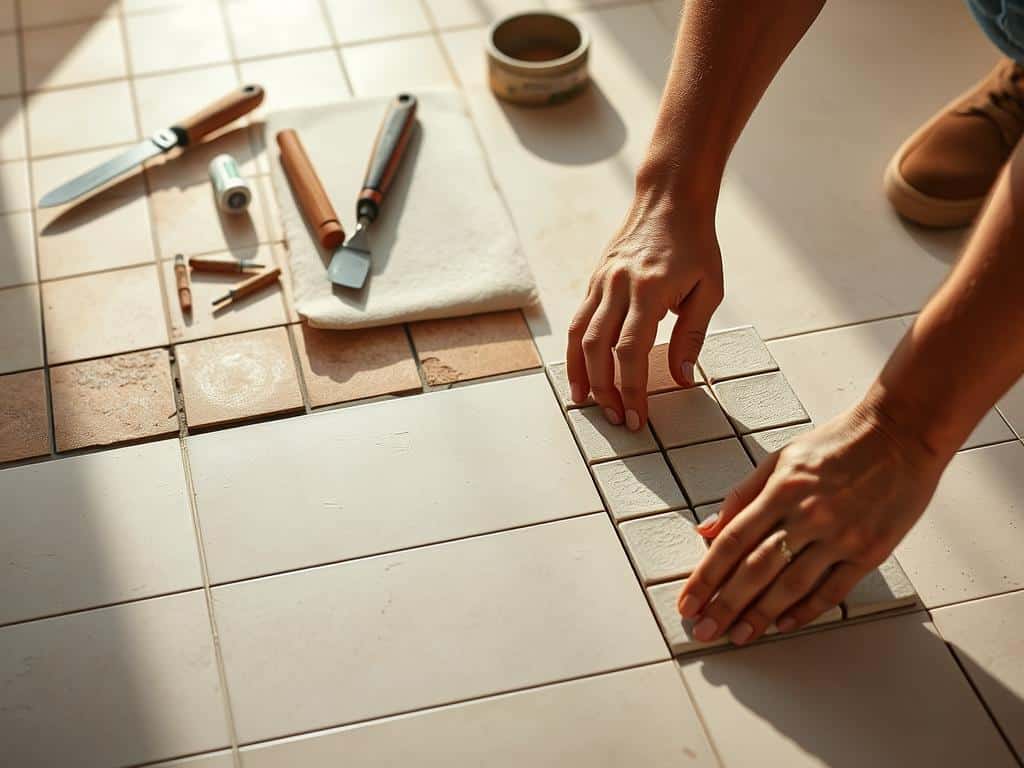
Did you know over 30% of homeowners in the U.S. are doing DIY home projects? Tile installation is a top choice. With the right tips, you can make your space look amazing with DIY Tile Installation. This guide will help you get a pro finish for your tile project.
I’ll cover everything from prep to the step-by-step process. You’ll learn how to make your DIY project a success. So, let’s start!
Key Takeaways
- Choose lightweight DITRA underlayment for easy cutting and waterproofing.
- Use tile spacers to maintain even spacing when laying tiles.
- Mix thin-set mortar in small batches for optimal freshness.
- Allow grout to cure thoroughly before sealing for lasting durability.
- Keep the installation area clean and debris-free before you begin.
- Test your layout lines using the 3-4-5 square method for perfect alignment.
Preparing for Your DIY Tile Installation
Starting a DIY tile project needs careful planning for the best results. It’s important to pick the right tiles, check and get ready the subfloor, and gather the right tools and materials.
Choosing the Right Tiles
Choosing tiles is a fun but key part of my projects. There are many styles, colors, and patterns to choose from. These choices can really change how my space looks.
I look closely at the different tile types, like those that resist moisture. Knowing about wear and slip resistance helps me pick tiles that look good and work well.
Inspections and Subfloor Preparation
Getting the subfloor ready is key for a good tile job. I make sure the surface is clean, dry, and even. I use a straight edge to find and fix any uneven spots.
For extra stability and to keep water out, I suggest using a backer board in wet areas. It’s also important to fill any gaps or uneven spots for a solid base.
Gathering Tools and Materials
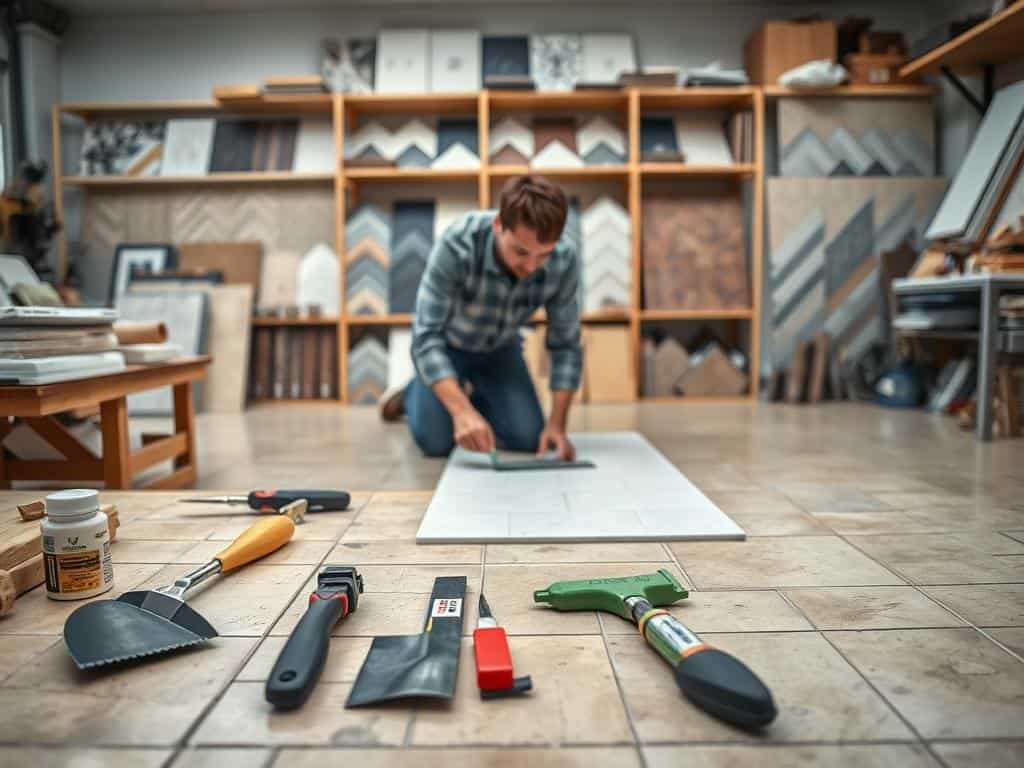
Having the right tools and materials is vital for my DIY tile projects. I get things like a mixing paddle, tile markers, drill, trowels, and a tile saw. I also use measuring tape, a level, knee pads, and spacers.
I choose top-notch thin-set mortar and a tile membrane that fits the project’s needs. These help me get a professional look without spending a lot on labor.
Step-by-Step Process for DIY Tile Installation
Starting a DIY tile project can change your space in amazing ways. Knowing each step is key to getting great results. From planning the layout to adding the final touches, every step matters.
Creating a Layout
Getting the layout right is the first step. I make sure the surface is clean and dry. Then, I mark the center of each wall.
Next, I draw chalk lines to create a grid. This helps me see how the tiles will fit. It’s a chance to make sure everything looks good.
Applying Mortar and Laying Tiles
With the layout done, it’s time for mortar. I spread a thin layer of adhesive with a notched trowel. Then, I lay tiles starting from the center, twisting them to set.
After laying tiles, I remove extra adhesive. I let the tiles set for 24 hours before moving on.
Grouting and Sealing
Once the tiles are set, I start grouting. I use a rubber float to fill the gaps. Then, I clean up any extra grout with a damp sponge.
It’s important to wait 72 hours for the grout to set. And don’t apply sealant for three weeks. This ensures the tiles last a long time.
Conclusion
Finishing a DIY tile project can make my home look and feel new. It’s rewarding to see the results of my hard work. Choosing the right materials and tools is key to a successful project.
DIY tile work is great for small, simple projects. But, bigger or more complex designs might be too much. It’s wise to know my limits and consider professional help when needed.
Details matter a lot in tile projects. Measuring, planning, and adding finishing touches like grout and sealant are important. Keeping my tiles clean and sealed will help them last longer. Whether I do it myself or get help, the end result is worth it.



MOST COMMENTED
Smart Living
10 Budget-Friendly Smart Home Upgrades Anyone Can Do
Home
Glass Walls: The Future of Modern Home Interiors
Lifestyle
7 DIY Ways to Instantly Reduce Stress!
Smart Living
Alexa vs. Google Home – Which Smart Speaker Wins?
Outdoor
How to Set Up an Outdoor Movie Night!
Lifestyle
How to Improve Focus & Mental Clarity Fast!
Home
Forget Minimalism! How to Nail Maximalist Style