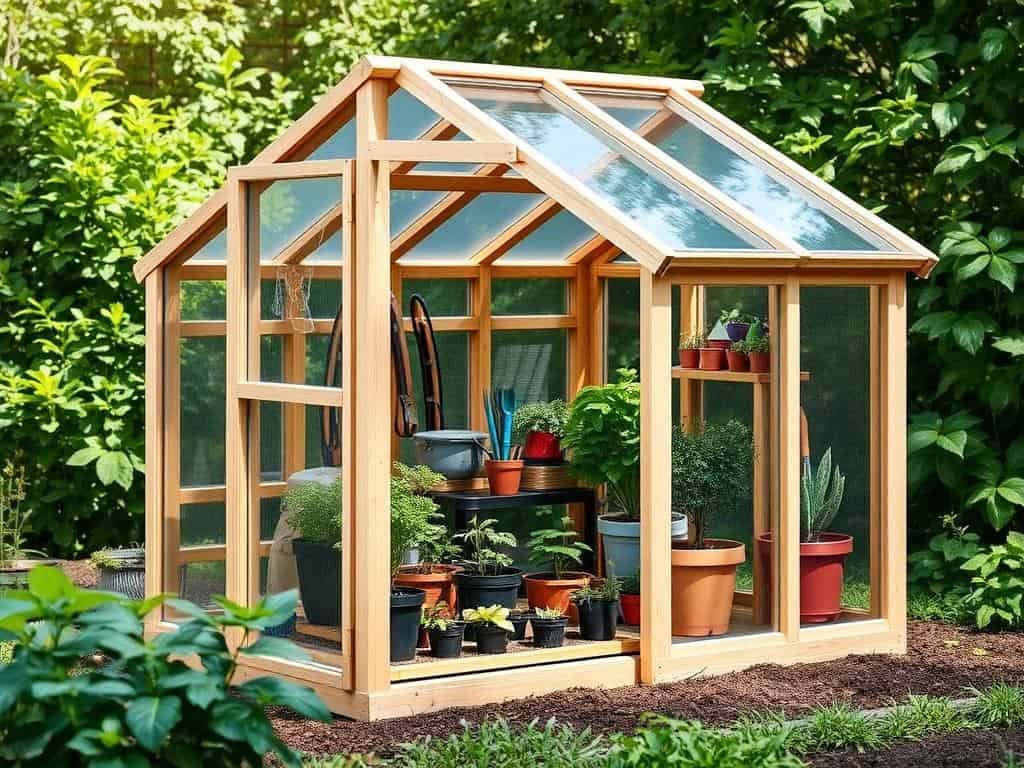
Did you know that nearly 70% of all home gardeners think a mini greenhouse boosts their gardening? Creating a controlled space for plants is more than a hobby. It’s a smart way to grow plants all year, no matter the weather. In this article, I’ll show you how to make a mini greenhouse on a budget. You’ll learn how to set up a DIY greenhouse that fits your garden’s needs without spending too much.
Key Takeaways
- A mini greenhouse can extend your gardening season significantly.
- Building a DIY greenhouse setup can be done using recycled and inexpensive materials.
- There are various designs, from PVC pipe greenhouses to recycled window plans.
- Utilizing free materials can greatly reduce overall costs.
- Proper ventilation and sunlight access are key for plant health.
Understanding the Benefits of a Mini Greenhouse
Mini greenhouses bring many benefits to gardening. They help plants grow better by extending the gardening season and creating a perfect spot for starting seeds. This knowledge helps me get the most out of my garden while keeping costs down.
Extend Your Gardening Season
Mini greenhouses are great for extending the gardening season. They let me start planting early in spring and keep growing into winter. This way, I can grow fruits and veggies that wouldn’t survive outside in bad weather.
They also protect plants from cold, frost, and other harsh elements. This keeps my plants healthy and growing strong.
Perfect for Starting Seeds
Mini greenhouses are perfect for starting seeds. They provide the right warmth and protection for my plants to grow. Using heirloom or family-saved seeds helps me control the type of plants and avoid disease.
This method is also cheaper than buying seedlings from stores. A small greenhouse can hold many plants, making it a space-efficient choice.
Cost-Effective Plant Care Solution
Mini greenhouses make gardening affordable. They are easy on the wallet, thanks to their simple designs or use of recycled materials. They help me get more from my garden without spending a lot on heating or fancy tools.
Features like adjustable ventilation also save energy. This makes mini greenhouses a smart and budget-friendly option for gardeners.
Essential Materials for Your DIY Greenhouse Setup
Building a mini greenhouse needs careful material selection. Using recycled greenhouse supplies saves money and is good for the planet. Here, I’ll list key materials for a strong and useful greenhouse. I’ll focus on cheap gardening supplies that are easy to find.
Recycled Materials for Sustainability
Choosing recycled greenhouse supplies is smart for saving cash and cutting down on waste. Old windows and reused wood make great bases or frames. They’re not only useful but also add a personal touch to your greenhouse.
Affordable and Easily Accessible Supplies
When I started my greenhouse, I found lots of affordable gardening supplies at local stores. PVC pipes are great because they’re light and cheap. For a cover, UV-stabilized polyethylene sheeting is both effective and affordable. Looking for these materials can help you save a lot of money.
Tools You’ll Need for Assembly
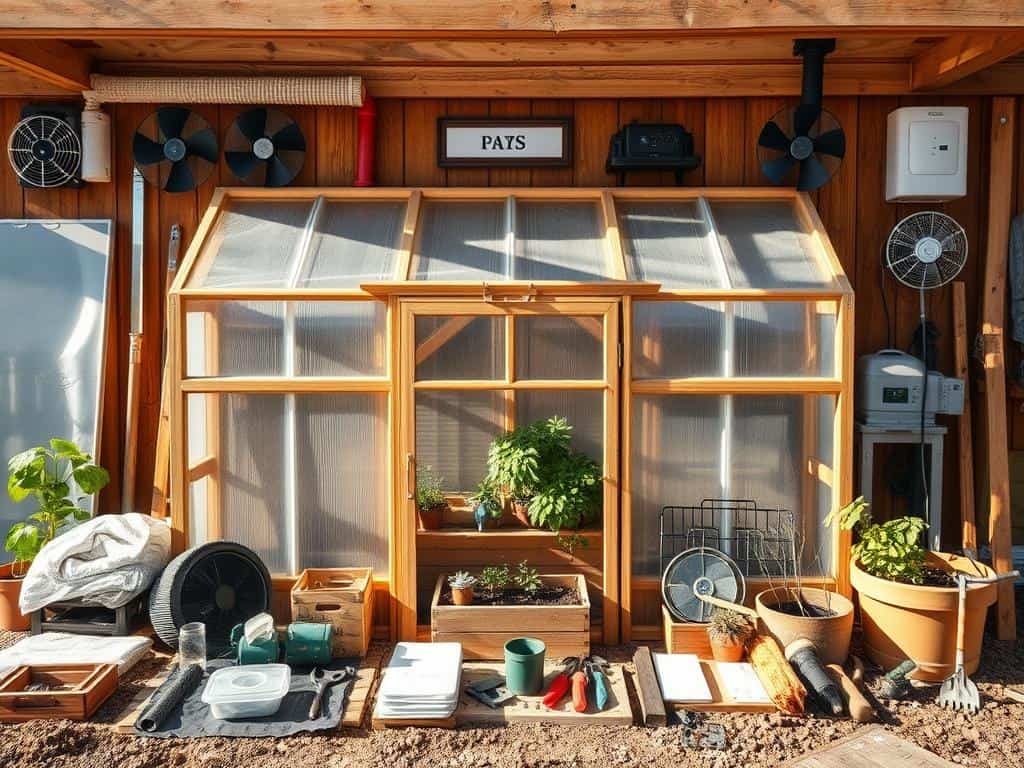
For any DIY project, the right tools are key. You’ll need basic greenhouse tools like hacksaws for PVC, zip ties for holding things together, and screws for a solid frame. Make sure you have these before starting to make the assembly process easier and ensure success.
Simple Steps to Build Your Mini Greenhouse
Building a mini greenhouse can change your gardening. It lets you grow many plants in a small space. I came up with creative ideas for greenhouses that fit any spot, from city balconies to small yards. Here are the steps to build your mini greenhouse, from picking materials to adding ventilation.
Design Ideas for Different Spaces
I used old windows to make a greenhouse. I built frames with 2x4s and 2x8s, making them about 15 inches tall. This lets me easily reach my plants. The roof’s slope helps get more sunlight, perfect for tall plants.
Old curio cabinets or IKEA’s Milsbo glass-door cabinet are great for stylish greenhouses. If you’re on a tight budget, try using wooden crates or plastic cups. They’re flexible and cost-effective.
Step-by-Step Instructions for Assembly
Building your greenhouse is easy with the right steps. First, cut your wood and screw the frames together. Make sure to seal the window frame with foam for insulation.
Use hinges and handles from old projects for easy access. Place your greenhouse in a sunny spot. I used dirt from my yard to save money. I grew plants like Tatsoi and Butter King Lettuce, which did well.
Ensuring Proper Ventilation
Good ventilation is key to avoid heat and keep humidity right. Use old glass doors or jars as covers for airflow. Small fans or ventilation holes from supermarket punnets help too.
By focusing on these details, I made a space that helps plants grow. It’s also functional and welcoming.
Conclusion
DIY greenhouses offer many benefits. They let plants grow all year and protect them from bad weather. I love creating a space where my plants can thrive, enjoying longer gardening seasons and better yields.
Building a mini greenhouse is easy and cheap. You can make one for under $200 using old materials like wooden pallets and plastic film.
Thinking about mini greenhouses, I see how great it is to garden sustainably. You can use PVC pipes and plastic to make your greenhouse. It helps plants grow and saves money.
Adding simple features like roll-up sides and roof flaps helps control temperature. This shows that you can have a great garden without spending a lot.
Starting this DIY project has been very rewarding. I’ve grown many different plants and enjoyed the benefits of gardening at home. I suggest you try it too. It’s a great way to grow your own plants and be eco-friendly.
Let your creativity and resourcefulness shine. Turn your gardening dreams into reality.


MOST COMMENTED
Smart Living
10 Budget-Friendly Smart Home Upgrades Anyone Can Do
Home
Glass Walls: The Future of Modern Home Interiors
Lifestyle
7 DIY Ways to Instantly Reduce Stress!
Smart Living
Alexa vs. Google Home – Which Smart Speaker Wins?
Outdoor
How to Set Up an Outdoor Movie Night!
Lifestyle
How to Improve Focus & Mental Clarity Fast!
Home
Forget Minimalism! How to Nail Maximalist Style