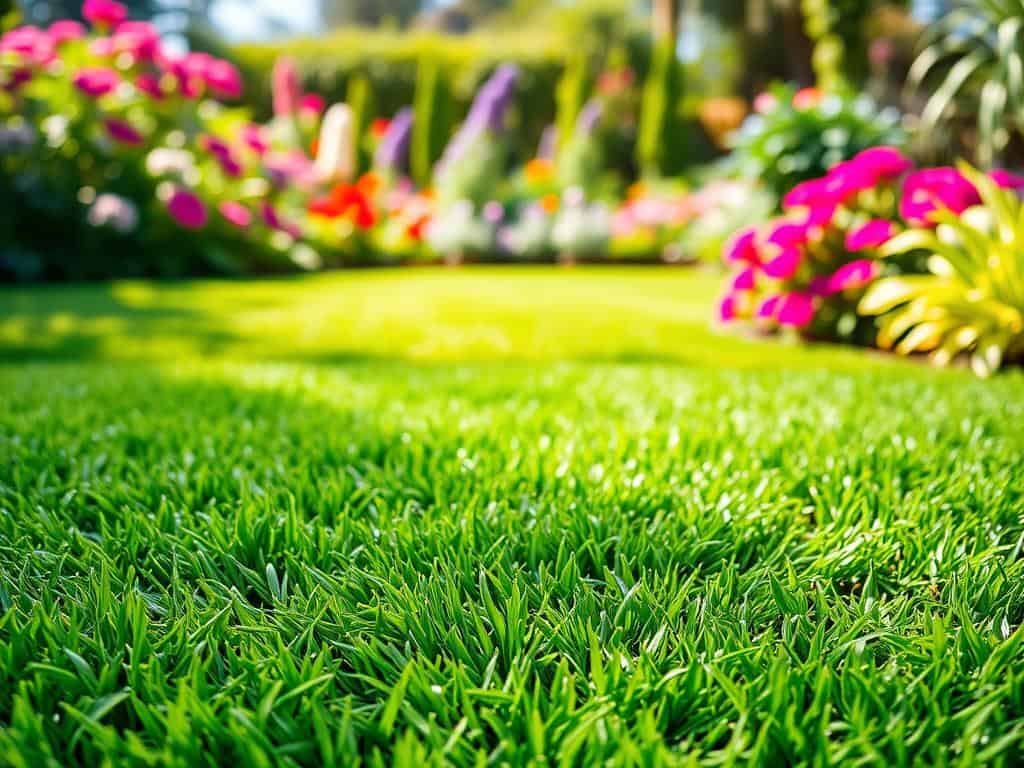
Did you know artificial grass can save about 22,000 gallons of water each year? It’s a big deal for those looking for easy lawn care. It’s durable, saves water, and doesn’t need harmful chemicals. But, is it right for you? Let’s explore the good and bad sides of synthetic turf in this guide.
Key Takeaways
- Artificial grass can save significant amounts of water each year.
- It requires minimal maintenance compared to natural grass.
- High-quality synthetic turf lasts between 15 to 25 years.
- Installing artificial grass reduces the need for gas-powered lawn care equipment.
- Environmental concerns include the contribution to landfill waste.
- Proper cooling infill can help mitigate heat retention issues.
- Regular maintenance is needed to keep the turf clean.
Understanding Artificial Grass
Artificial grass looks and feels like real grass but is made of synthetic materials. It’s great for those who want easy-to-care-for landscaping. This type of turf has come a long way, starting with AstroTurf in the 1960s.
What is Artificial Grass?
Artificial grass is made of different materials to mimic real grass. Polyethylene, polypropylene, and nylon are the main types. Each has its own strengths, like durability and softness.
The length of the grass blades is also important. For busy areas, blades between ⅜ to ⅝ inches work well. For a lush look, choose blades 1 ¼ to 2 ½ inches long.
Key Components of Synthetic Turf
Knowing what makes up synthetic turf helps appreciate its quality. The density of the grass affects how real it looks. Higher density means better quality.
Face weight shows how durable and realistic the turf is. It’s also important to have good drainage. This can be achieved with different backing materials.
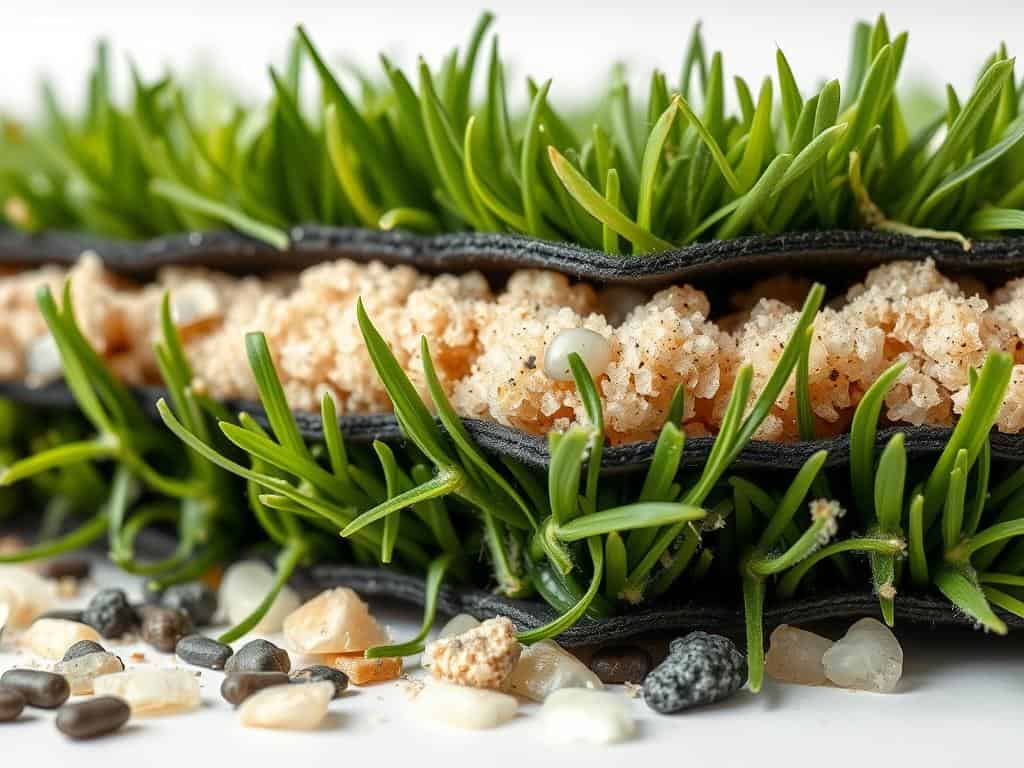
A solid sub-base is key for drainage and to prevent damage. Modern artificial grass looks and feels like the real thing. It has realistic colors and layers that make it appealing. For places with lots of foot traffic, choose durable turf to avoid problems.
Artificial Grass Guide: Pros and Cons
Choosing artificial grass can change your outdoor space a lot. I’ll share the good and bad sides of synthetic turf. Knowing the benefits, like saving water and looking good, and the downsides, like getting hot and feeling stiff, helps you decide.
Advantages of Artificial Grass
Artificial grass is easy to care for. No mowing, fertilizing, or weeding needed. It saves about 22,000 gallons of water a year, which is great for areas with little rain.
It’s also very durable. It can handle a lot of foot traffic, perfect for families with kids or pets. It lasts 15 to 25 years, looking and feeling good in all weather. Plus, it’s safe for pets, not getting damaged by digging or clawing.
Disadvantages of Artificial Grass
But, there are downsides too. It can get very hot, up to 150 degrees Fahrenheit on sunny days. This makes it hard to walk on barefoot, bad for pets or kids.
It’s also not good for the environment, made from petroleum and not biodegradable. It ends up in landfills. Cleaning it regularly is needed to keep it looking good and smelling fresh. It’s not as natural as real grass, feeling stiff and cool.
Conclusion
Exploring artificial grass has shown me its good and bad sides. It’s great because it needs little care, saves water, and looks green all the time. Plus, top-quality artificial grass can last up to 25 years, saving money on lawn upkeep.
But, there are downsides too. Artificial grass might get hot and can harm the environment if not disposed of properly. It’s also good for pets but needs occasional deep cleaning and proper waste handling.
In the end, choosing artificial grass depends on what you need and can afford. It’s a sustainable option that can make your yard look great and be easy to maintain. This could be the key to a beautiful lawn without the usual lawn care troubles.


MOST COMMENTED
Smart Living
10 Budget-Friendly Smart Home Upgrades Anyone Can Do
Home
Glass Walls: The Future of Modern Home Interiors
Lifestyle
7 DIY Ways to Instantly Reduce Stress!
Smart Living
Alexa vs. Google Home – Which Smart Speaker Wins?
Outdoor
How to Set Up an Outdoor Movie Night!
Lifestyle
How to Improve Focus & Mental Clarity Fast!
Home
Forget Minimalism! How to Nail Maximalist Style