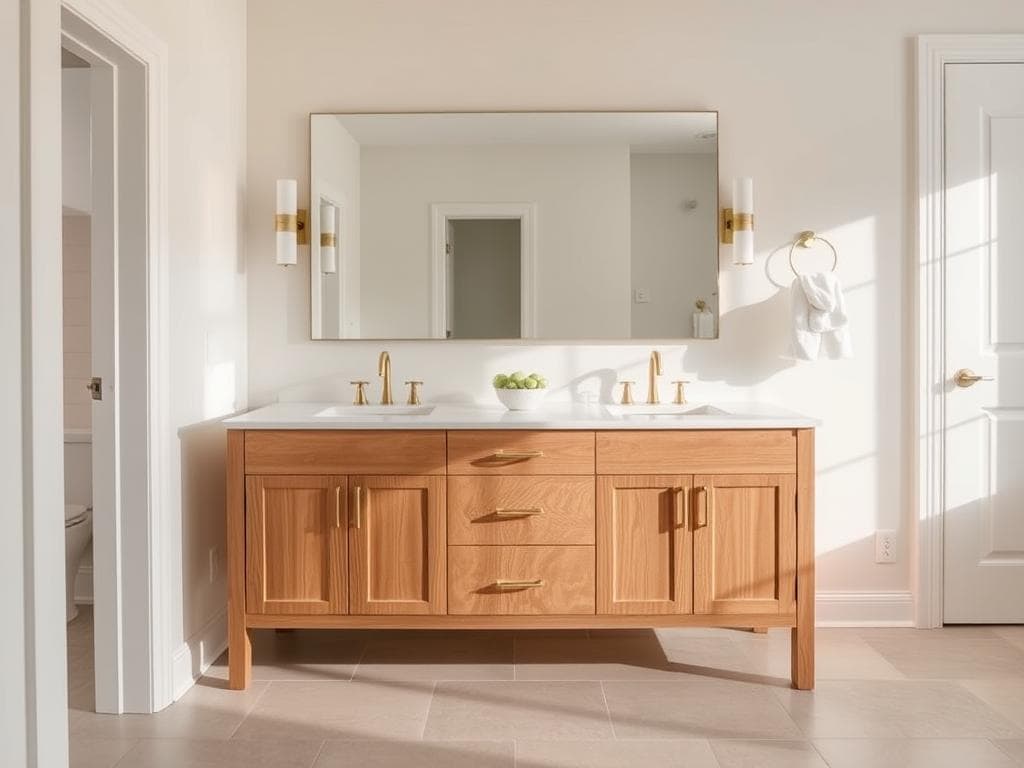
Did you know a custom bathroom vanity can cost over $1,782? But, you can make one yourself for just $406. A DIY vanity lets you customize your space and save money. You can use IKEA’s Godmorgon line for the basics to get a fancy look without spending a lot.
In this guide, I’ll show you how to build your own custom bathroom vanities. We’ll cover the tools you need and how to put it all together. A DIY vanity can make your bathroom look better and show off your style. Plus, doing it yourself can save even more money, including the plumbing and sinks.
Key Takeaways
- DIY Bathroom Vanities can save significant amounts of money compared to custom-built options.
- Using affordable brands like IKEA makes it possible to achieve a stylish look on a budget.
- Personal customization allows for unique design that fits your individual style.
- Installing fixtures yourself can further reduce renovation costs.
- Proper planning and tool use can minimize waste and improve efficiency.
Introduction to Custom Bathroom Vanities
Custom bathroom vanities are very popular now. Homeowners love them for making their bathrooms look great. You can choose from many styles, like modern or rustic.
I once chose a rustic vanity made from Alder wood. It had a Provincial stain. This choice was affordable and looked amazing. The vanity had soft-close drawers and magnetic doors, making it both stylish and practical.
Storage is important in bathrooms. My vanity had hidden outlets in the drawers. This made it easy to keep things tidy. It was made to fit my space perfectly, with special details like 1,500 fluted lines.
Creating a custom vanity is a great way to show off your style. It can also meet your storage needs. With the right materials and design, your bathroom can become a special place.
Materials Needed for Your DIY Bathroom Vanity
Building a DIY bathroom vanity needs careful thought about materials and tools. Each part is key to making your vanity look great, work well, and last long. I’ll cover the tools you’ll need and list the best materials for your project.
Essential Tools for the Build
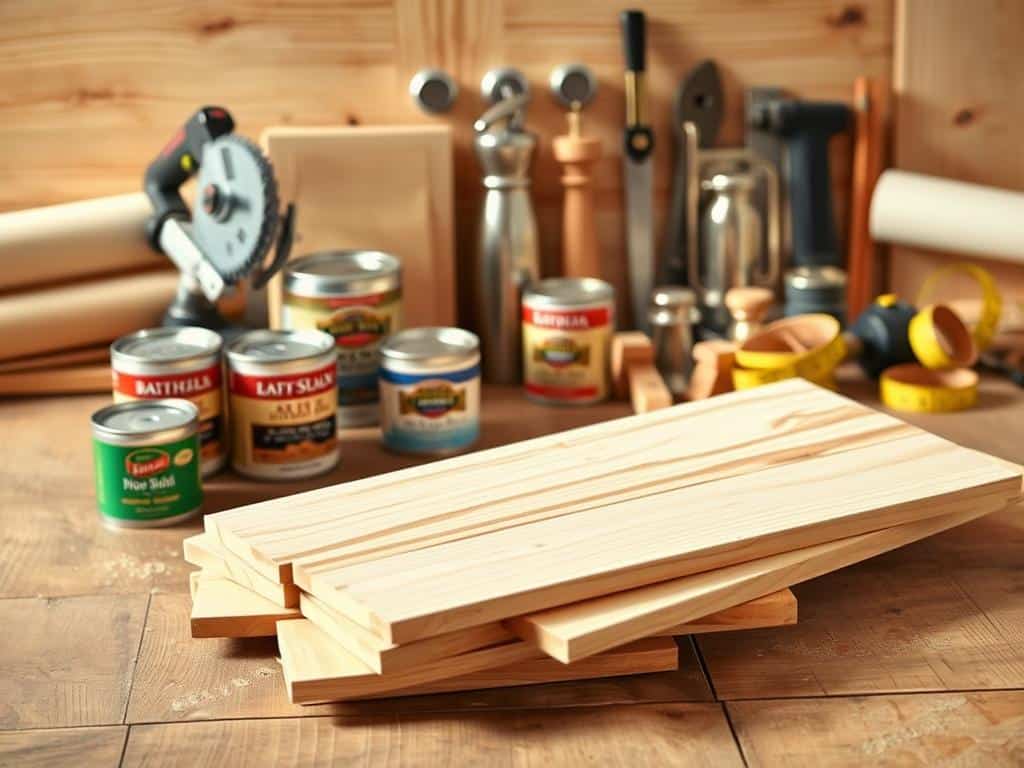
You’ll need various tools to start your vanity. A cordless drill/driver is a must for screwing and installing parts. A table saw or track saw helps make clean cuts. A compound miter saw is great for precise angles.
Clamps, a carpenter’s square, and a tape measure are also essential. They help ensure your pieces fit right. Always wear safety gear like glasses, masks, and ear protection.
Recommended Materials
The right materials make your vanity look and work well. Use 3/4-inch hardwood plywood for the base. Add 1/4-inch plywood for extra strength.
Dimensional lumber like 1x3s and 2x2s are good for the frame. Salvaged wood or marble can add style. White quartz or marble countertops make it look even better.
Modern touches like tilt-out trays and self-closing hinges are a plus. Choose cabinet knobs and drawer pulls that match your style.
Choosing the right tools and materials makes your vanity reflect your taste. It will also last through daily use.
Step-by-Step Guide to Building Your DIY Bathroom Vanity
Building your own bathroom vanity is a great way to save money and make it your own. I’ll guide you through the process, from cutting lumber to putting it all together. This way, you can make a vanity that fits your style perfectly.
Lumber Cuts and Preparation
The first step is making precise cuts from lumber. I chose premium pine wood and plywood for their strength and good looks. You’ll need to cut pieces for the sides and legs.
“For a 33″ tall x 21″ deep x 24″ wide vanity, the cuts include 2x3s for the frame and 1x2s for additional support.”
Make sure to measure and cut each piece carefully. A miter saw helps make clean cuts, making assembly easier. Remember, the sink top should be 25″ x 22″, so plan your cuts around that size.
Assembly Instructions
With your cuts ready, it’s time to start assembling. Use a Kreg Jig to make pocket holes for strong joints. Begin by building the frame with the 2x3s. Attach the sides to the bottom first, making sure everything is square and tight.
For the doors, use 1×3 frames with 1/2″ plywood centers for a sleek look. Add European inset hinges and check that the doors open smoothly. Finish with wood stain and polyurethane for a glossy finish. Magnetic door catches help keep the doors shut.
By following these steps, you’ll create a DIY bathroom vanity that’s both functional and stylish. It will fit your needs and budget perfectly.
Conclusion
Wrapping up this DIY Bathroom Vanity project, the benefits are clear. I saved a lot of money by not buying a pre-made vanity. Plus, I got to make it my own, fitting my style and space perfectly.
The joy of a custom build is unmatched. It makes the room truly reflect my taste. This project also let me use sustainable materials, helping the environment.
Choosing eco-friendly materials made my bathroom look better and increased its value. This is great for anyone looking to sell their home in the future.
I hope to inspire others to try DIY home projects. It’s exciting to create a beautiful space without spending a lot. With help from Lily Ann Cabinets, making your dream space is easier than ever.



MOST COMMENTED
Smart Living
10 Budget-Friendly Smart Home Upgrades Anyone Can Do
Home
Glass Walls: The Future of Modern Home Interiors
Lifestyle
7 DIY Ways to Instantly Reduce Stress!
Smart Living
Alexa vs. Google Home – Which Smart Speaker Wins?
Outdoor
How to Set Up an Outdoor Movie Night!
Lifestyle
How to Improve Focus & Mental Clarity Fast!
Home
Forget Minimalism! How to Nail Maximalist Style