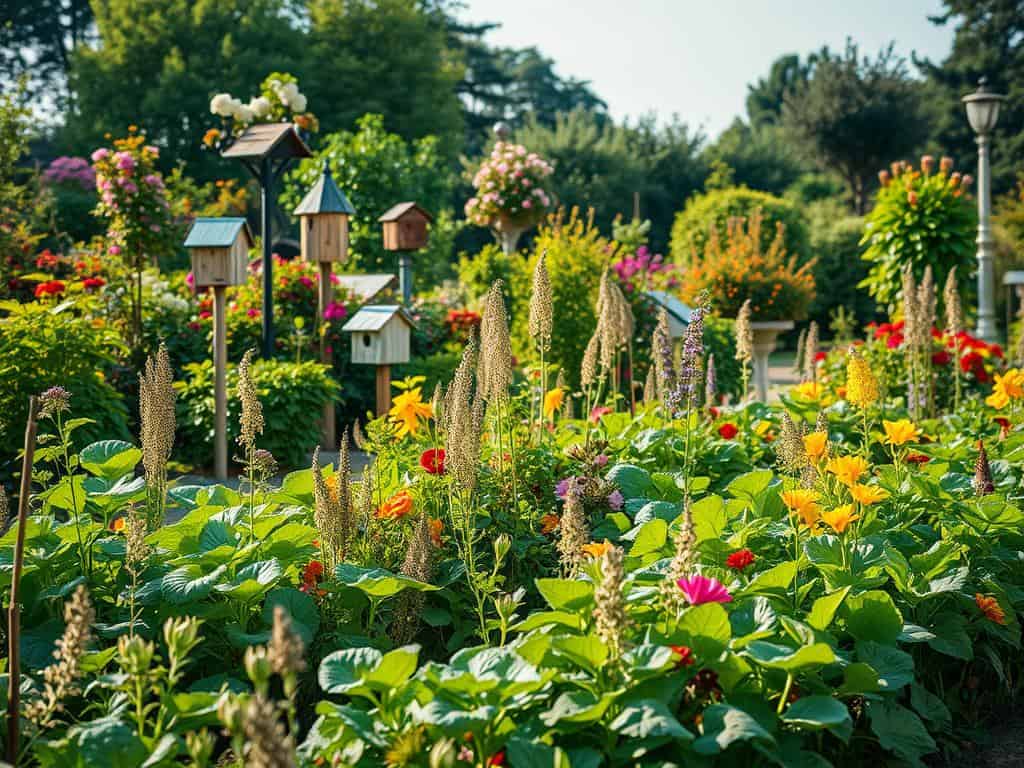
Did you know that nearly 30% of the world’s crops are lost each year to pests? This fact shows how vital it is to find safe ways to control pests in our gardens. Using organic pest control helps protect our plants and the environment. It lets us grow a healthy garden without harmful chemicals.
By choosing natural pest deterrents, we welcome helpful insects into our gardens. This approach not only keeps our crops safe but also boosts biodiversity. It’s a win-win for our gardens and the planet.
Practicing eco-friendly gardening, like companion planting, keeps pests away and improves soil. I love using safe pesticides from common items, showing that gardening can be both good for the earth and effective. Let’s explore simple yet powerful ways to keep our gardens pest-free and thriving.

Key Takeaways
- Companion planting can effectively deter harmful pests while improving soil health.
- Neem oil serves as a natural pesticide, affecting the breeding cycles of many common garden pests.
- Utilizing diatomaceous earth can help control hard-shelled insects by drying them out.
- Attracting beneficial insects like ladybugs can significantly reduce pest populations without chemicals.
- Physical barriers such as netting and copper tape can provide a protective shield for garden plants.
- Maintaining a clean garden through proper care reduces pest habitats.
- Applications of essential oils can naturally repel a variety of unwanted insects.
Understanding the Importance of Organic Pest Control
I’ve learned how vital organic pest control is for a healthy garden. Chemical pesticides are common but harmful. They damage plants, soil, wildlife, and human health. So, I’ve looked for safer alternatives that help my garden and the planet.
The Harmful Effects of Chemical Pesticides
Chemical pesticides harm the ecosystem, degrading soil and killing beneficial insects. This hurts soil health and garden productivity. They also pose health risks, making it urgent to find better ways.
The Benefits of Going Organic for Your Garden
Switching to organic gardening has many benefits. It reduces chemical use and boosts biodiversity. Organic gardening creates a balanced ecosystem and healthier produce. It’s good for my garden and the environment.
Effective Natural Methods to Deter Garden Pests
In my gardening journey, I’ve found that natural methods can keep pests away. Companion planting, creating homes for beneficial insects, and using Neem oil help manage pests. This way, I avoid harsh chemicals.
Companion Planting: Friends in the Garden
Companion planting means growing certain plants together to help each other. For example, marigolds keep aphids away, while garlic and chives deter insects. Mint keeps flies and beetles off, and basil and rosemary ward off mosquitoes.
Lavender is great at keeping fleas and mosquitoes away. By arranging these plants wisely, I protect my crops naturally.
Creating Habitats for Beneficial Insects
Encouraging beneficial insects like ladybugs and lacewings is key. They add beauty and help control pests. For instance, a ladybug can eat up to 60 aphids a day.
By planting flowers and herbs that attract these insects, I keep my garden balanced. This makes it less welcoming for harmful pests.
The Role of Neem Oil in Pest Management
Neem oil is a natural insecticide from the Neem tree. It’s effective against pests like aphids and spider mites. It stops pests from eating and reproducing.
To make a Neem oil spray, mix 1 teaspoon of neem oil with 1/2 teaspoon of mild dish soap in 2 pints of distilled water. This spray protects my plants without harming beneficial insects.
Implementing Organic Pest Control Techniques
Organic gardening makes your garden healthier and more sustainable. It uses DIY bug sprays, physical barriers, and good garden care. This way, pests are naturally kept away.
DIY Organic Bug Sprays and Their Application
Making your own bug sprays is a simple way to fight pests without chemicals. You can mix soap and garlic for a strong spray. For example, water and liquid soap can kill soft-bodied insects.
Neem oil is great because it fights over 200 pests and diseases. Use these sprays carefully to protect good bugs. Spray them at night for the best results.
Using Physical Barriers to Protect Your Plants
Physical barriers are a smart way to keep pests off your plants. Row covers, nets, and mesh protect plants without blocking light or air. Make sure to weigh down the mesh to keep flying pests out.
Plant trap crops to draw pests away from your main plants. This helps keep pests focused on one area.
Maintaining a Healthy Garden: Best Practices
Keeping your garden healthy is key to fighting pests. Use organic matter to make the soil better for plants. This makes plants stronger against pests.
Change what you plant to keep pests from getting used to your garden. Check your plants often to catch pests early. Use tools like hand lenses to spot problems quickly.
Also, keep weeds away to reduce pest homes. Mulch and weed by hand to keep your garden clean.
Conclusion
Organic pest control is more than a choice; it’s a commitment to a healthier garden. By using natural methods, I’ve seen big improvements in plant health and biodiversity. Companion planting and beneficial insects, like ladybugs, have greatly reduced pests without harmful chemicals.
These methods do more than just fight pests. They also improve soil health and support sustainable farming. While starting might cost more, the long-term savings and environmental benefits are worth it.
My goal is to keep improving my gardening with integrated pest management. This approach uses different methods to keep pests away for good. It’s about creating a garden that’s strong and healthy, thanks to sustainable practices. This way, I help make our environment better for everyone.

MOST COMMENTED
Smart Living
10 Budget-Friendly Smart Home Upgrades Anyone Can Do
Home
Glass Walls: The Future of Modern Home Interiors
Lifestyle
7 DIY Ways to Instantly Reduce Stress!
Smart Living
Alexa vs. Google Home – Which Smart Speaker Wins?
Outdoor
How to Set Up an Outdoor Movie Night!
Lifestyle
How to Improve Focus & Mental Clarity Fast!
Home
Forget Minimalism! How to Nail Maximalist Style