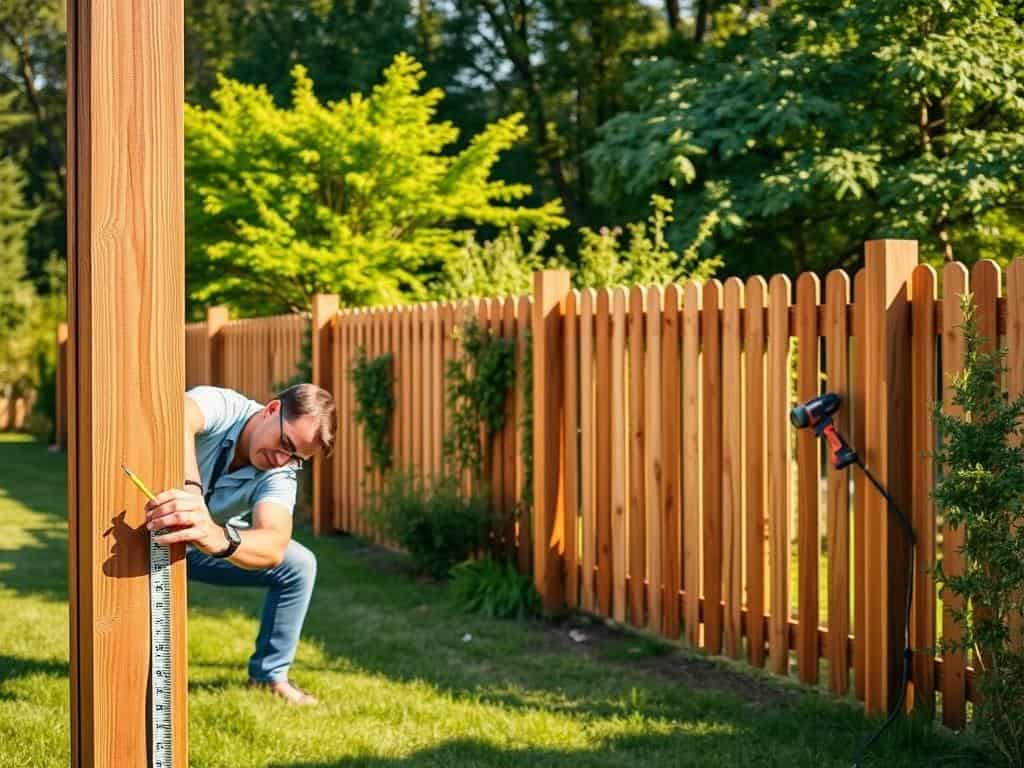
Did you know DIY fence installation can save homeowners thousands? It’s a cost-effective option, but it comes with its own set of challenges. Issues like rocky soil or hidden utilities can increase costs and time.
But, with the right plan, I can turn my backyard into a private and secure space. This guide will show how to build a fence like a pro, saving money and time. I’ll cover the best materials, tools, and how to avoid common mistakes.
Key Takeaways
- DIY fence installation can save thousands compared to hiring professionals.
- Pre-made fence kits simplify the building process with various material options.
- Preparing for challenges like rocky soil is key for a successful project.
- Essential tools include post digging tools and fast-setting concrete.
- Getting the necessary building permits is vital before starting.
- Avoiding common mistakes can prevent costly repairs later.
Understanding the Benefits of Building Your Own Fence
Building my own fence has many perks. It boosts my privacy and home value. I love designing a fence that matches my backyard and meets my needs. Doing it myself lets me enjoy the DIY fence benefits firsthand.
Enhancing Privacy and Security
A good privacy fence sets clear boundaries around my property. It keeps intruders out and lets my family and pets play safely outside. I can make my fence tall to add more privacy and security.
Increasing Home Value
Building a fence can really up my home’s value. A well-made fence makes my house look better to buyers. It also adds practical benefits like noise reduction and privacy, making my home more appealing.
Personalizing Your Backyard Oasis
Building my fence lets me add my personal touch. I pick materials, styles, and colors that fit my taste and backyard. This way, my fence shows off my personality and turns my outdoor space into a dream spot.
DIY Fence Installation: Step-by-Step Guide
Starting a DIY fence project is both fun and fulfilling. A good plan makes the work easier and faster. Knowing how to lay out the fence, pick the right materials, and get the right tools is key.
Planning Your Fence Layout
Planning the fence layout is the first step. I figure out the fence’s purpose and check property lines and local rules. Getting a permit and checking height and position rules are musts.
I measure the fence area to know how many panels and posts I need. Talking to neighbors about the fence helps avoid problems later.
Choosing the Right Materials
Choosing the right materials is important. Options include wood, vinyl, metal, and composite. Each has its own look, durability, and upkeep needs.
For example, a cedar wood fence can last up to 40 years with proper care. I pick materials that fit my home and the neighborhood.
Gathering Essential Tools and Equipment
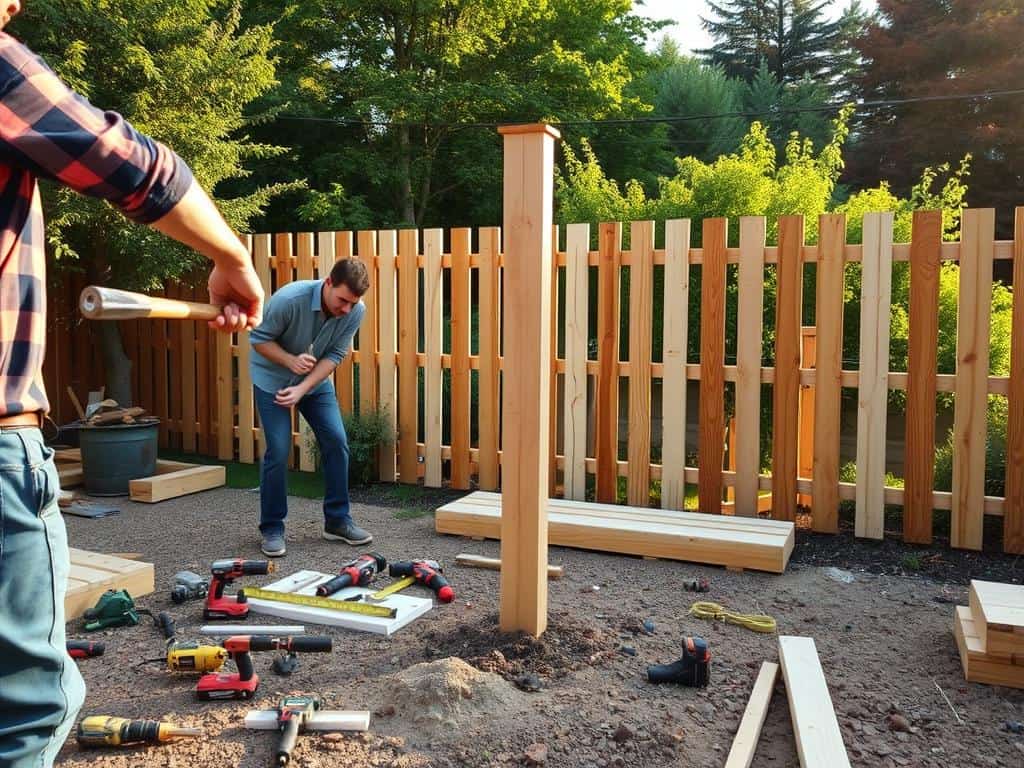
Having the right tools makes the job easier. My tools include a measuring tape, post-hole digger, and level. A saw is needed for cutting wood.
I also have safety gear like gloves and goggles. A wheelbarrow helps move materials, and a power drill makes installing hardware easier.
Cost-Effective Tips for Building a Fence
Choosing the right materials for a fence is key to saving money upfront and in the long run. I’ve looked into different options to find the most cost-effective ones. Knowing the differences between wood and vinyl, pre-made panels, and quality tools can help a lot.
Exploring Material Options: Wood vs. Vinyl
Wood is a favorite for its beauty and affordability. Pressure-treated wood is durable and easy to find. Vinyl fencing, though pricier at first, lasts longer and needs less upkeep.
Composite fencing is another option. It looks like wood but is made of plastic, making it durable.
Utilizing Pre-Made Fence Panels
Using pre-made fence panels can make installation faster and more uniform. While board-and-stringer fences are cheaper, panels save time and effort. They ensure even spacing, which is great for DIY beginners.
Investing in Quality Tools for Efficiency
Good tools are essential for any DIY project. A post hole digger, level, and circular saw are must-haves. They make the job safer and more efficient.
For simpler projects, like board-and-stringer fences, you’ll do less heavy lifting. This is a big plus for those working alone.
Conclusion
Building a fence needs careful planning, the right materials, and tools. This guide has shown how important it is to think about my budget, time, skills, and project complexity. By following these steps, I can confidently tackle a DIY fence installation. I can also find affordable solutions that improve my backyard style.
It’s key to research and plan well for a smooth installation. Finding the right balance between cost and quality is important to avoid future problems. I should also be ready for unexpected costs and time when planning my project.
If I face challenges, I can get help from experts like True Design Landscape Company. They offer support with planning, material selection, and solving problems.
Choosing to do it myself adds to the beauty and durability of my fence. It also makes me feel proud of my work. Every decision I make helps make my home look better, safer, and more private. With hard work and a willingness to learn, I’m on track to achieve my fencing goals and make my backyard a special place.


MOST COMMENTED
Smart Living
10 Budget-Friendly Smart Home Upgrades Anyone Can Do
Home
Glass Walls: The Future of Modern Home Interiors
Lifestyle
7 DIY Ways to Instantly Reduce Stress!
Smart Living
Alexa vs. Google Home – Which Smart Speaker Wins?
Outdoor
How to Set Up an Outdoor Movie Night!
Lifestyle
How to Improve Focus & Mental Clarity Fast!
Home
Forget Minimalism! How to Nail Maximalist Style