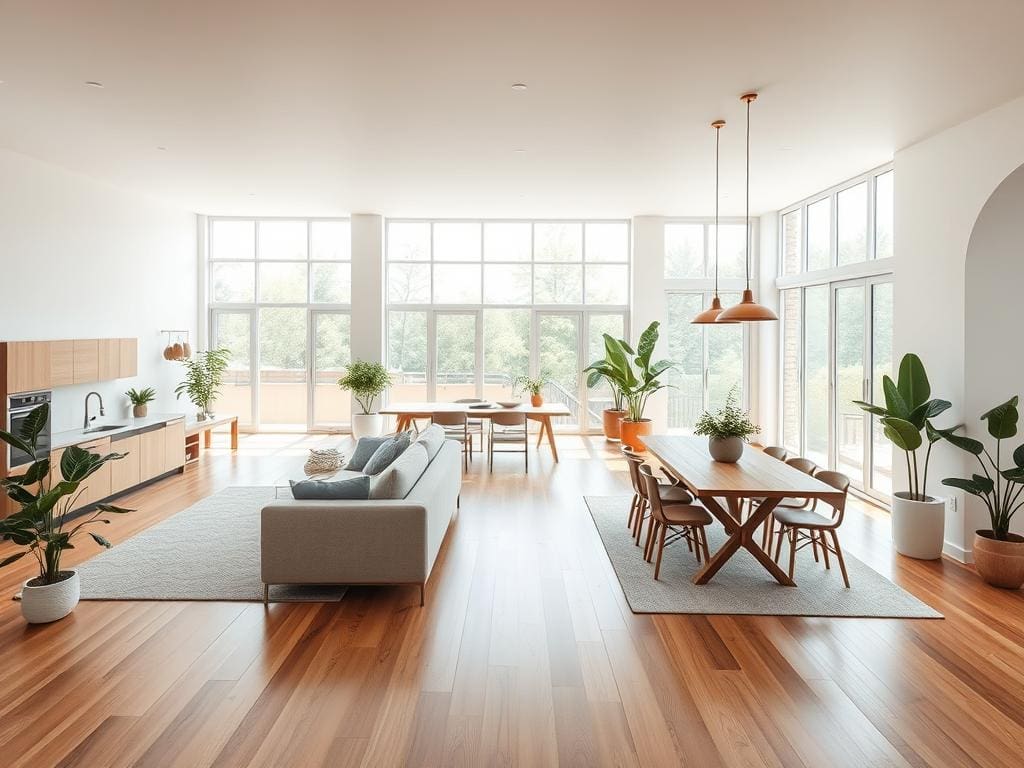
Did you know that nearly 70% of new homes in the United States have open floor plans? This trend shows how important it is to connect with each other at home. But, open floor plans also come with their own set of design challenges.
When I think about open floor plans, I focus on making them work well. I use furniture and colors in a way that makes the space flow smoothly. A good layout makes the home look better and feel more connected.
By treating the whole area as one big space, we can make it look great. We can use the same colors, materials, and styles everywhere. This way, we can make the most out of our open floor plans.
Key Takeaways
- Open floor plans promote social interaction and family bonding.
- Cohesive color schemes enhance visual flow across spaces.
- Strategic furniture placement helps define different zones effectively.
- Area rugs can delineate spaces while keeping a unified look.
- Utilizing lighting elements creates both functional and aesthetic separation.
- Incorporating storage solutions is essential for maintaining organization.
The Benefits of Open Floor Plans
Open floor plans are becoming more popular. They offer many benefits for modern living. One big plus is how they help people connect and talk more.
Without walls, it’s easier to move around and chat. This makes family gatherings and parties more fun. It’s great for spending time with loved ones.
Encouraging Social Interaction
Open-concept designs make talking easy. Family members can chat while doing different things. This is really helpful for parents who want to keep an eye on kids while they cook or clean.
It helps families bond and get closer. This is a big plus of open floor plans.
Increased Natural Light
Open floor plans also let in more natural light. Without walls, light flows easily from windows. This makes the home feel welcoming and bright.
I love how it makes the home feel bigger and more inviting. It’s a big advantage of these layouts.
Versatile Use of Space
Open floor plans are also very versatile. They can be used in many ways, depending on what you need. Whether it’s a family room, dining area, or office, they adapt easily.
I like to change the layout to fit different activities. It makes my home both useful and lively.
Open Floor Plan Ideas for Functional Spaces
Creating a functional open floor plan needs careful thought. It’s about dividing space and arranging furniture wisely. Using creative space division techniques can make an area flow better and be more useful.
By defining specific zones, you keep the layout open. Yet, each section feels purposeful.
Creative Space Division
Elements like tall screens, built-in shelving, or decorative beams can create visual barriers. They provide separation and act as focal points. For example, a large bookshelf can mark the transition between living and dining areas.
Patterned wallpaper or accent walls can also visually separate spaces. They do this without closing them off.
Furniture Arrangement Techniques
Strategic furniture arrangements are key to a functional open floor plan. Grouping sofas in a U-shape encourages conversation and creates cozy spots. A well-placed console table can act as a subtle divider between zones.
Incorporating pendant lighting over tables or seating areas highlights these divisions. It acts as an anchor and an inviting focal point.
Use of Area Rugs
Area rugs are essential in open floor plans. They help define spaces like the living room or dining area. They add warmth and comfort, improving the look.
Rugs also serve an acoustic purpose by absorbing sound. This is great in larger areas. By choosing rugs that match the design, each space can feel unique yet connected.
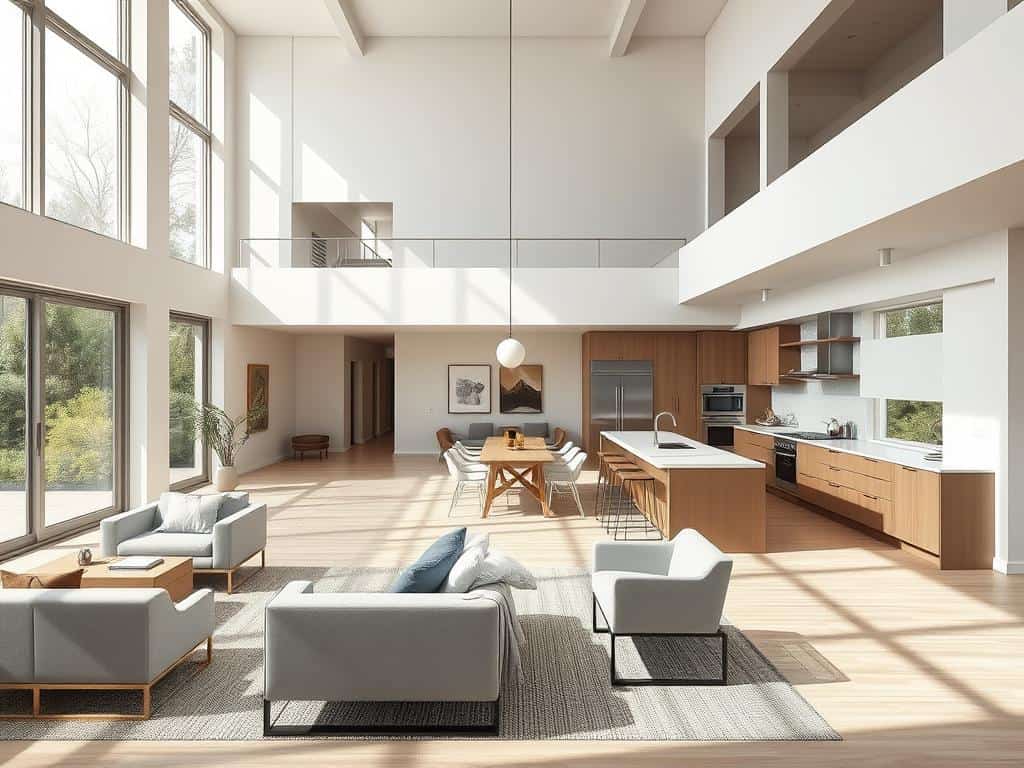
Decorating Tips for Cozy Open Concepts
To make cozy open concepts warm and inviting, focus on color and lighting. Use decorative color schemes to blend areas smoothly. A consistent color palette helps tie everything together.
Utilizing Color Schemes
Start with a neutral base to add colorful accents. These can be throw pillows, artwork, or decorative items. They add personality to each area without overwhelming it.
Repeating textures and tones helps connect different areas. This creates a cohesive and harmonious look.
Incorporating Lighting Elements
Lighting is key to setting the mood in open concepts. Ambient lighting adds warmth, while task lighting is functional. Pendant lights or chandeliers can highlight dining or seating areas.
By balancing these lighting types, you can make the space feel inviting and comfortable.
Conclusion
Creating a successful open floor plan is all about mixing function and beauty. I’ve shown how the right design can change your space. With smart furniture and colors, you can make your home flow smoothly.
Open floor plans fit many styles, from modern to industrial. Adding cozy touches like soft fabrics and warm lighting makes your space feel welcoming. Using rugs and lights helps create zones without walls.
To make an open concept work, balance simplicity with comfort. By keeping things tidy, my open layout stays a peaceful space. It fits my lifestyle and welcomes visitors easily. Try these ideas and see how your open floor plan can become a beautiful, functional home.

MOST COMMENTED
Smart Living
10 Budget-Friendly Smart Home Upgrades Anyone Can Do
Home
Glass Walls: The Future of Modern Home Interiors
Lifestyle
7 DIY Ways to Instantly Reduce Stress!
Smart Living
Alexa vs. Google Home – Which Smart Speaker Wins?
Outdoor
How to Set Up an Outdoor Movie Night!
Lifestyle
How to Improve Focus & Mental Clarity Fast!
Home
Forget Minimalism! How to Nail Maximalist Style