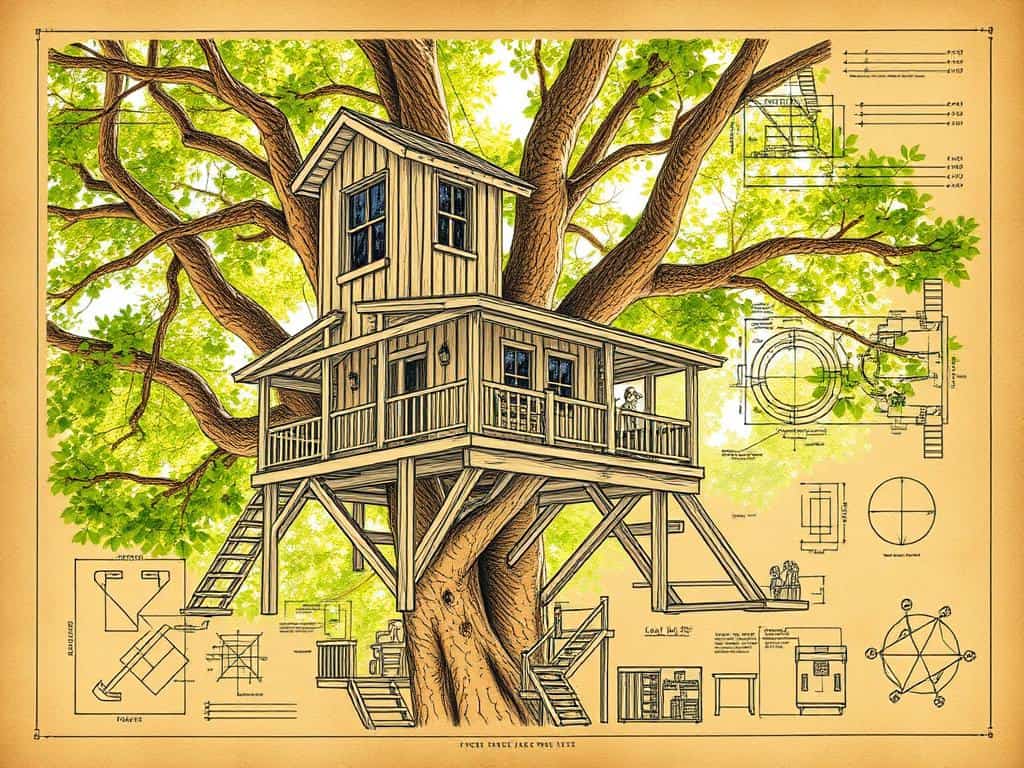
Did you know that nearly 70% of American kids spend less time outdoors than their parents did? Building a backyard treehouse is a fun way to get them outside. It lets kids play, explore, and use their imagination in nature.
This guide will help you build a safe and exciting playhouse. You’ll learn how to pick the right tree and gather the necessary materials. Your family will love this special place for years.
Key Takeaways
- Utilize multiple trees for a larger structure and enhanced stability.
- A height of 9 feet is ideal, giving excitement without too much fear.
- Gather key materials like pressure-treated lumber and strong lag screws.
- Essential tools include a cordless drill, jigsaw, and hammer for building.
- Think about using eco-friendly materials like recycled fence wood for your design.
- Get inspired by detailed tutorials and professional shows.
- Remember, safety first: ask experts for help with complex builds.
Choosing the Right Tree for Your Backyard Treehouse
Building a treehouse is more than just picking a tree. The right tree can make the playhouse safer and more fun. It’s important to think about the tree type, height, and branch strength. These factors affect the treehouse’s safety and how long it lasts.
Ideal Tree Types for Treehouses
Hardwood trees like oak, maple, and beech are great for treehouses. They have strong trunks and branches, making a solid base. Stay away from trees with multiple trunks or signs of disease.
Mature deciduous trees are best. They have strong roots that keep the treehouse stable, even in windy weather.
Height Considerations
Treehouses should be at least 10 feet high for safety. This height adds excitement and reduces risks. Always check the tree’s height before designing the treehouse. It affects the design and how easy it is for kids to get to.
Assessing Branch Strength
Checking the branch strength is key when picking a tree. Look for thick, healthy branches that can hold the treehouse’s weight. Thicker branches mean more stability, making playtime safer.
Before building, check for any hazards like decay or weak spots. These can harm the treehouse’s safety.
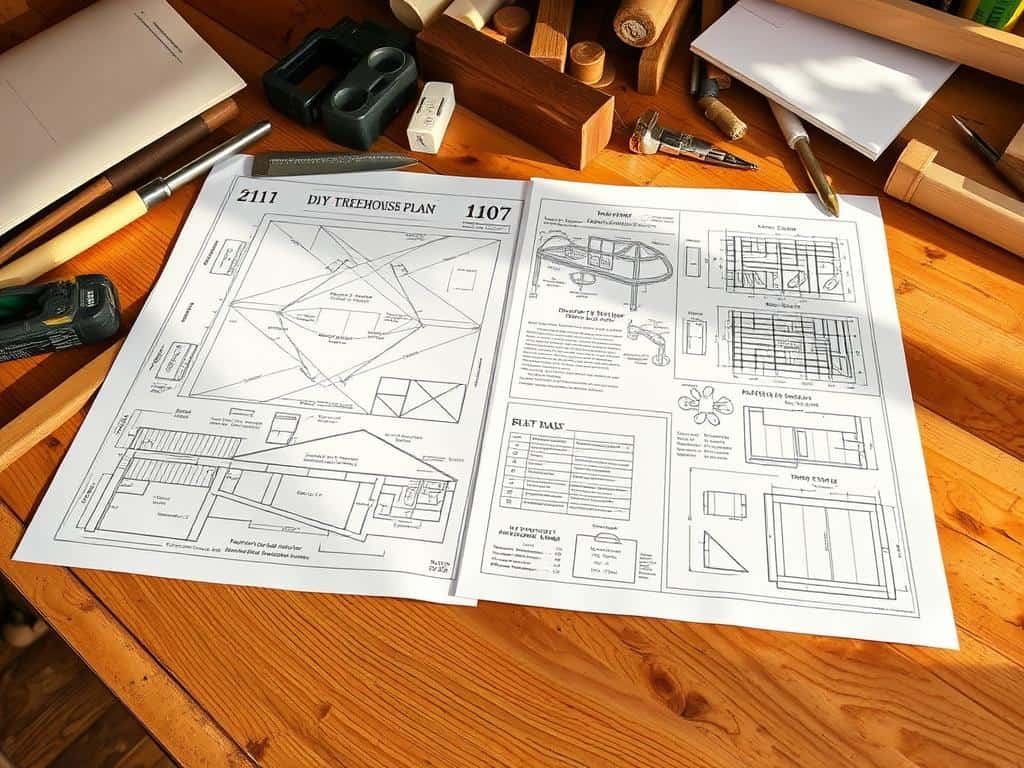
Planning Your Build with DIY Treehouse Plans
Starting a treehouse project needs careful planning. The right DIY treehouse plans help ensure every detail is covered. From measuring sizes to adding safety features, a blueprint is key.
Good plans give you cutting lists, diagrams, and step-by-step guides. This makes building safe and efficient.
Creating a Blueprint
A detailed blueprint is your guide for the treehouse project. It outlines the platform, walls, and safety features. Plans like HERITAGE and CANOPY offer different styles.
Each plan is designed for different tastes. You can even get advice from experienced builders.
Gathering Necessary Materials
After making a blueprint, it’s time to get materials. You’ll need durable lumber, deck screws, and support brackets. Plans like GROUND BREAKERS offer unique designs for your tree.
Keeping a list of materials helps avoid missing anything important. This ensures your project goes smoothly.
Selecting Tools Required for Construction
Before starting, choose the right tools for woodworking. You’ll need basic hand tools and power tools like a drill and jigsaw. Having the right tools saves time and improves quality.
Step-by-Step Construction Process
Building a treehouse is a detailed process that needs careful planning. Each step is important to make sure the treehouse is strong and safe. The process starts with the foundation, then moves to the walls, and ends with the roof.
Building the Foundation and Platform
I start by picking a strong tree with a “Y” shaped branch. Hardwoods like oak, maple, or hickory are best. I set 4×4 posts on concrete blocks to create the foundation.
Scrap lumber helps hold the posts in place. I connect them with 2×8 bands for more support. Then, I attach 2×8 floor joists to the tree with long lag screws.
Angle braces and Treehouse Attachment Bolts (TABs) add extra stability. They help the platform last as the tree grows.
Framing the Walls
After the foundation is ready, I frame the walls. I use 2×4 studs to build a strong structure. I make sure to leave space for windows and doors.
It’s important to keep the tree safe from damage. Shear walls help the walls stand up to different weather.
Installing the Roof and Safety Features
The last step is installing the roof. It’s key to keep the treehouse dry. I make sure the roof is tight to handle wind and rain.
Safety features like railings and a secure entrance are also important. They keep kids safe and make it easy to get in and out.
Conclusion
Building a backyard treehouse has been incredibly rewarding. It has become a lively spot for outdoor fun over the last six summers. Activities like Nerf gun fights and water balloon battles have filled it with laughter.
The effort put into this DIY project has paid off. It brings joy to children of all ages. This treehouse has become a beloved part of our family.
Looking back, careful planning was essential for a smooth build. We chose a strong oak tree for stability and safety. Adding plywood to the railings made it safer for younger kids.
Soon, we’ll add a tarp for shade. This will make the treehouse even more enjoyable. It’s a place where memories are made and cherished.
This treehouse is more than just a structure. It’s a family treasure that will hold many more memories. Whether it becomes an office or stays a play area, its joy is priceless. I hope my story encourages others to create their own treehouse adventures.


MOST COMMENTED
Outdoor
From Urban Chaos to Wilderness Calm: the Art of How to Pack a Hiking Backpack for a Seamless Escape
Home
High-End Bathroom Trends You’ll Want to Copy!
Technology
Protecting Your Digital Sanctuary: an Aesthetic Guide on How to Secure Your Home Wireless Network
Lifestyle
Beat Winter Blues with These Mood-Boosting Tips!
Home
A No-nonsense Guide to Removing Carpet Stains Without the Hype
General
A No-nonsense Guide to Starting a Vegetable Garden: From Urban Balconies to Real Harvests
Smart Living
How to Build a Smart Security System for Under $100