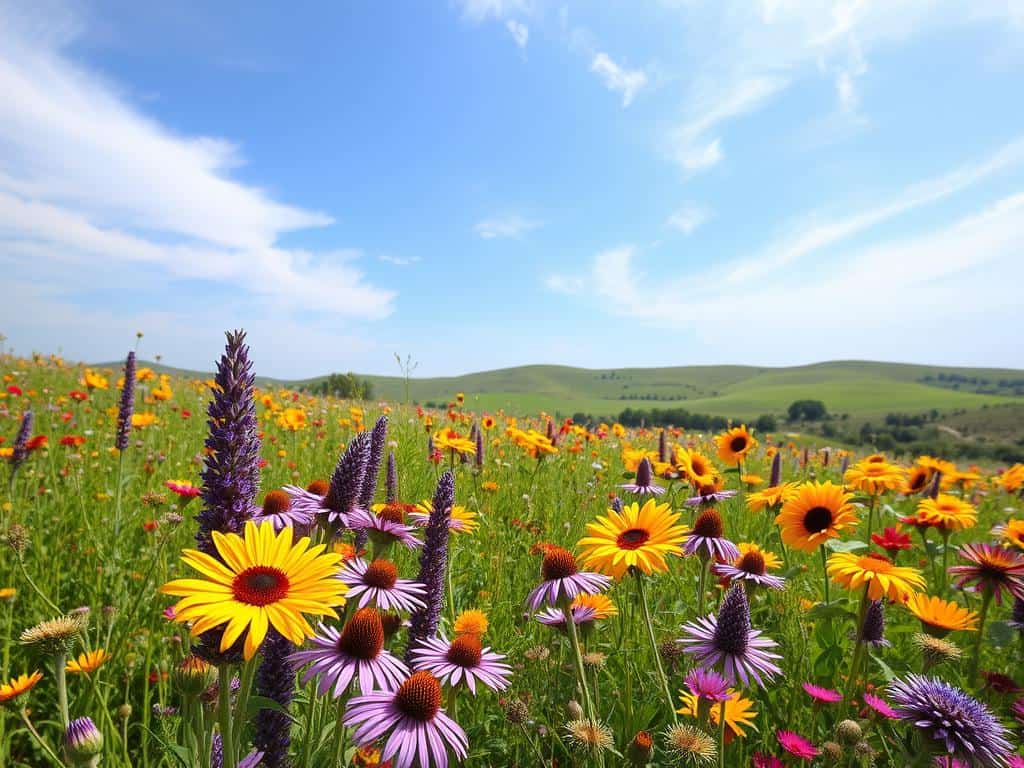
Did you know that nearly one-third of the food we eat comes from pollinators? This fact shows how important bees are to our world. By planting flowers with lots of nectar and pollen, we help these vital creatures. This also makes our gardens more lively and supports many animals.
Through eco-gardening, I’ve found that picking the right flowers for bees is key. It’s not just good for them but also makes our gardens full of life. From beautiful purple coneflower to hardy black-eyed susans, there are many choices. These can make a big difference in our gardens.
Key Takeaways
- Pollinators contribute to one-third of our food supply.
- Planting flowers with nectar and pollen supports bee populations.
- Choosing native and well-adapted plants enhances biodiversity.
- Varied flower shapes and colors attract a diverse range of bee species.
- Eco-gardening practices create a balance in our ecosystems.
Importance of Pollinators in Our Ecosystem
Pollinators like bees, butterflies, and birds are very important. They help about 300,000 species of flowering plants survive. They are key for 80-95% of natural plants to reproduce, keeping our biodiversity strong.
Bees are among the most important pollinators, with over 4,000 species in the U.S. Their numbers have been dropping, with about 30% lost each year. This highlights the need to protect them. Without pollinators, our food supply could be at risk.
Many plants rely on these pollinators to grow. They help produce food like fruits, veggies, and nuts. Bees need access to flowers all season to keep their colonies healthy.
Best Plants for Bees
Choosing the right plants is key to attracting bees to my garden. Native plants are the best choice. They are four times more appealing to bees than non-native plants. Clustering these plants creates a natural habitat for bees.
Some top native plants include bee balm, asters, and purple coneflowers. They support bees and grow well in different conditions.
Native Plants Over Non-Native Options
Native plants are great for bees and the local ecosystem. Bee balm is a favorite because it loves full sun and grows in zones 3 to 9. Its bright blooms and sweet scent attract bees.
Asters are another excellent choice. They grow in full sun to part shade and zones 3 to 8. They provide late-season nectar for bees. Purple coneflowers also thrive in full sun and zones 3 to 9. They make it easy for bees to find food.
Flowers That Bloom Across Multiple Seasons
Choosing seasonal flowers ensures bees have food all year. Joe Pye weed and Anise hyssop bloom in mid to late summer. They offer nourishment during warmer months.
Rudbeckia, or black-eyed Susan, blooms in full sun and zones 3 to 9. With blooms from spring to fall, I create a bee haven in my garden.

Creating a Bee-Friendly Garden
Creating a bee-friendly garden needs careful planning. It’s important to think about habitats for honeybees and solitary bees. These bees do well in diverse, resource-rich environments. By choosing the right plants and placing them well, I make a welcoming space for these pollinators.
Creating Habitats for Nesting
To help bee populations, I focus on nesting habitats. I use old wood and bare ground for nesting sites. These changes help the local bee population a lot. I also add a shallow water source, like a bee pool, to attract more bees.
I avoid pesticides and herbicides to keep my garden safe. I let weeds like dandelions and clovers grow. They provide food for bees. I also choose native plants that fit my local environment. Their flowers offer nectar all season, from spring to fall.
My aim is to support biodiversity and have a thriving garden. By doing this, I invite bees and help our ecosystem’s health.
Conclusion
Attracting bees is more than a hobby; it’s key to biodiversity and pollinator conservation. By picking the right plants, I help bees get the food they need. This is essential for their survival.
Bees are vital for our food, pollinating a third of our crops. This shows how important they are for our food and the health of our ecosystems.
By choosing a variety of plants, my garden blooms all season. This is great for bees. The 19 plants mentioned are perfect for a bee-friendly garden and grow well in different conditions.
Supporting bee diversity makes our ecosystems more vibrant. This is good for both bees and our environment.
I urge all gardeners to adopt eco-gardening. Choose native plants and create homes for bees. This helps us understand how our gardening affects pollinators.
Together, we can make gardens that are beautiful and good for the environment. This benefits both nature and us.


MOST COMMENTED
Smart Living
10 Budget-Friendly Smart Home Upgrades Anyone Can Do
Home
Glass Walls: The Future of Modern Home Interiors
Lifestyle
7 DIY Ways to Instantly Reduce Stress!
Smart Living
Alexa vs. Google Home – Which Smart Speaker Wins?
Outdoor
How to Set Up an Outdoor Movie Night!
Lifestyle
How to Improve Focus & Mental Clarity Fast!
Home
Forget Minimalism! How to Nail Maximalist Style